Skip to content

Get an Instant Roof Cost Estimate →

Need a new roof or repairs?

  • Call (628) 233-8140
  • Home
  • About
    • Who We Are
    • Why Choose Us?
  • Roofing Services
    • Roof Inspection
    • Roof Installation
    • Roof Repair
    • Roof Replacement
    • Skylight Installation
  • Commercial
    • Commercial Roofing Contractors
    • Commercial Roof Installation
    • Commercial Roof Repairs
  • Materials
    • Asphalt Shingles
    • Metal Roof Panels
    • Clay & Concrete Tiles
    • Skylight Installation
    • TPO Flat Roof
    • Flat Roof Contractors
    • Flat Roof Repair
    • Flat Roof Installers
  • Service Area

    San Francisco Bay Area

    • Alamo
    • Belmont
    • Berkeley
    • Burlingame
    • Danville
    • Dublin
    • Fremont
    • Los Gatos
    • Millbrae
    • Milpitas
    • Oakland
    • Orinda
    • Palo Alto
    • Piedmont
    • Pleasanton
    • Pleasant Hill
    • Redwood City
    • Richmond
    • San Bruno
    • San Carlos
    • San Francisco
    • San Jose
    • San Leandro
    • San Lorenzo
    • San Mateo
    • San Pablo
    • San Ramon
    • South San Francisco
    • Walnut Creek

    Marin County

    • Belvedere
    • Corte Madera
    • Fairfax
    • Kentfield
    • Larkspur
    • Mill Valley
    • Novato
    • Ross
    • San Anselmo
    • San Rafael
    • Sausalito
    • Tiburon
    • Tamalpais-Homestead Valley
  • Roof Cost Calculator
  • Gallery
  • FAQs
  • Blog
Contact
  • Roof Repair

Complete Roof Repair vs. Replace Guide for Homeowners

Michael Machkovsky

  • Roof Repair
Split-screen comparison of two residential roofs showing isolated shingle damage suitable for repair on the left versus widespread deterioration requiring full roof replacement on the right.

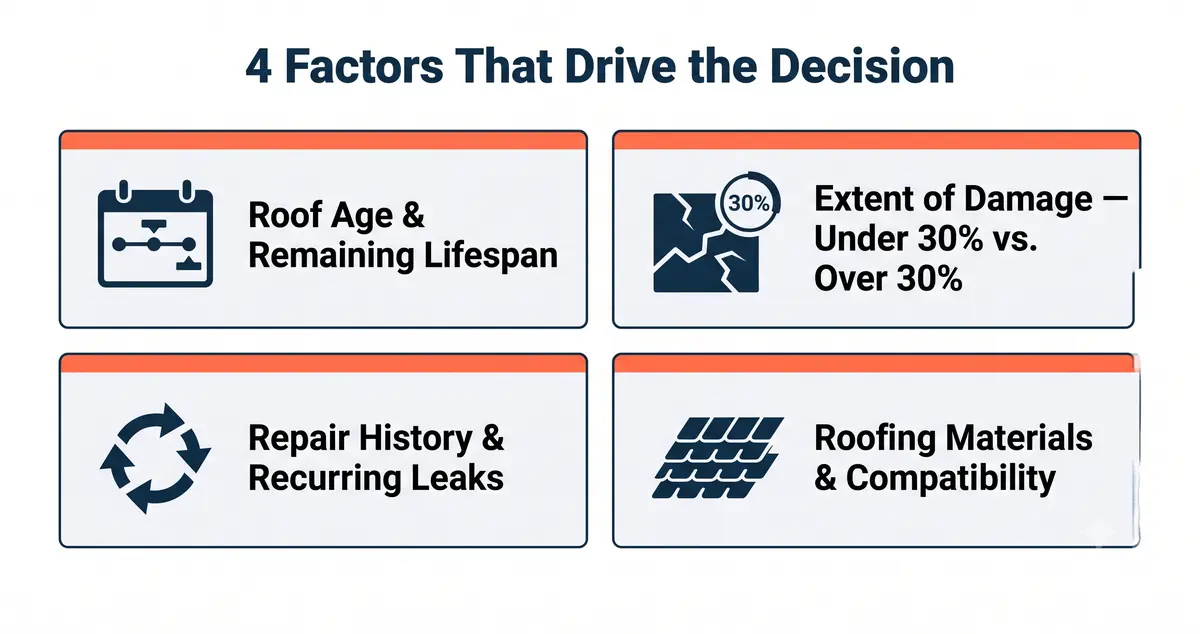
The core question in this roof repair vs. replace guide is straightforward: when does a targeted fix make sense, and when does a full roof replacement deliver better value? The answer turns on four factors — roof age, the extent of damage, your repair history, and the roofing materials in place.

When damage is isolated and the roof is well within its service life, roof repair fixes the problem without the cost of a full system. When leaks are recurring, damage is widespread, or the roof is nearing end of life, the right option is replacement. This guide walks Marin County homeowners through each factor and the decision checklist that follows from them.

Quick Answers to FAQs

What determines whether I need roof repair or replacement?

The right choice depends on roof age, the extent of roof damage, and your repair history. For roofs under 15 years old with isolated damage, roof repair is usually the logical starting point. When damage is widespread, leaks are recurring, or the roof is near end of service life, roof replacement delivers better long-term value. A roof inspection from a licensed contractor is the most reliable path to a clear answer.

What is the difference between roof repair and full roof replacement?

Roof repair addresses localized issues — replacing shingles, resealing flashing, or correcting a specific roof leak. Full roof replacement removes the existing system down to the deck and installs new materials, underlayment, and flashing. Replacement resets the manufacturer warranty and resolves underlying issues that a simple repair cannot reach.

How do storm damage and hail damage affect the decision?

Storm damage limited to one section supports targeted repair. When storm damage is distributed across multiple slopes, or hail damage has caused widespread granule loss, full replacement is typically the right option. Review your insurance policy with your contractor before accepting a repair settlement when replacement may be the authorized scope.

Can I do a partial repair rather than replacing the whole roof?

Partial replacement — replacing one slope or section — is appropriate when surrounding shingles are sound and roof damage is clearly contained. The tradeoff is shingle matching: on an old roof, new shingles will show visible color differences from the existing field. Experienced roofers present this as a known limitation. Full replacement resolves the matching issue and delivers uniform warranty coverage across the entire surface.

How often should homeowners schedule a roof inspection?

Most roofing contractor professionals recommend a roof inspection every 3 to 5 years for roofs within their expected service life, and annually for roofs older than 15 years. After a significant storm or hail damage event, an immediate roof inspection is warranted regardless of visible damage from the ground. Proactive maintenance identifies minor issues before they become structural ones.

Four-quadrant infographic showing the key factors that determine whether to repair or replace a roof: roof age and remaining lifespan, extent of damage, repair history and recurring leaks, and roofing materials and compatibility.

What Shapes a Repair vs. Replacement Decision?

No single variable settles this. Experienced roofers assess the four factors below together before making a recommendation.

1. Roof Age and Remaining Lifespan

Asphalt shingle roofs last 20 to 30 years under typical Marin County conditions. Metal roof systems run 40 to 70 years, and flat roof membranes generally hold 15 to 25 years before major intervention is needed. Once a roof has consumed 75 percent of its expected lifespan, the economics of patch-and-wait change.

A repair bill of $2,000 to $4,000 on a roof with five usable years left rarely makes financial sense. A new roof resets the service clock, restores warranty coverage, and eliminates the accumulating cost of multiple repairs on shingles that are past their prime.

2. Extent of Damage

Roof damage covering less than 30 percent of the surface generally supports repair. Beyond that threshold — especially when it reaches the decking or underlayment — replacement is typically the more defensible call. Common scenarios and what they signal:

  • Storm damage (missing or displaced shingles): Repairable if contained to one slope. Widespread wind damage across multiple sections shifts the math toward replacement.
  • Hail damage: Granule loss from impact events accelerates UV deterioration across the whole field, often justifying a full insurance claim and replacement rather than a targeted repair.
  • Isolated leaks at a single penetration: Repairable when the surrounding shingles are structurally sound.
  • Water damage reaching the deck: Once decking is saturated or rotted, the project becomes a full replacement by definition — you cannot safely re-shingle over compromised structure.

3. Repair History and Recurring Leaks

A single event does not indicate a failing roof. But when leaks return to the same location two or three times, the pattern signals systemic deterioration. Repeated patching accumulates cost without fixing the underlying issue. Review your repair history carefully — previous repairs on aging material can also void manufacturer warranties.

One of the more expensive mistakes many homeowners make is treating recurring leaks as unrelated incidents. When mismatched sections from prior repair work cover an increasing share of the roof surface, a simple repair becomes both cosmetically and structurally inadequate. Qualified roofers will identify this pattern during inspection rather than patch around it.

4. Roofing Materials and Compatibility

The roofing materials on your home affect which options are available. On a shingle roof 15 or more years old, finding an exact match for shingles is often impossible — the result is visible patchwork. For a home headed to market, mismatched sections affect both appraisal and buyer inspection outcomes.

For flat roof and metal systems, partial replacement is more structurally demanding. Membrane roofing requires careful seam and overlap integration. Poorly executed repairs on flat roofs are among the most common sources of recurring leaks.
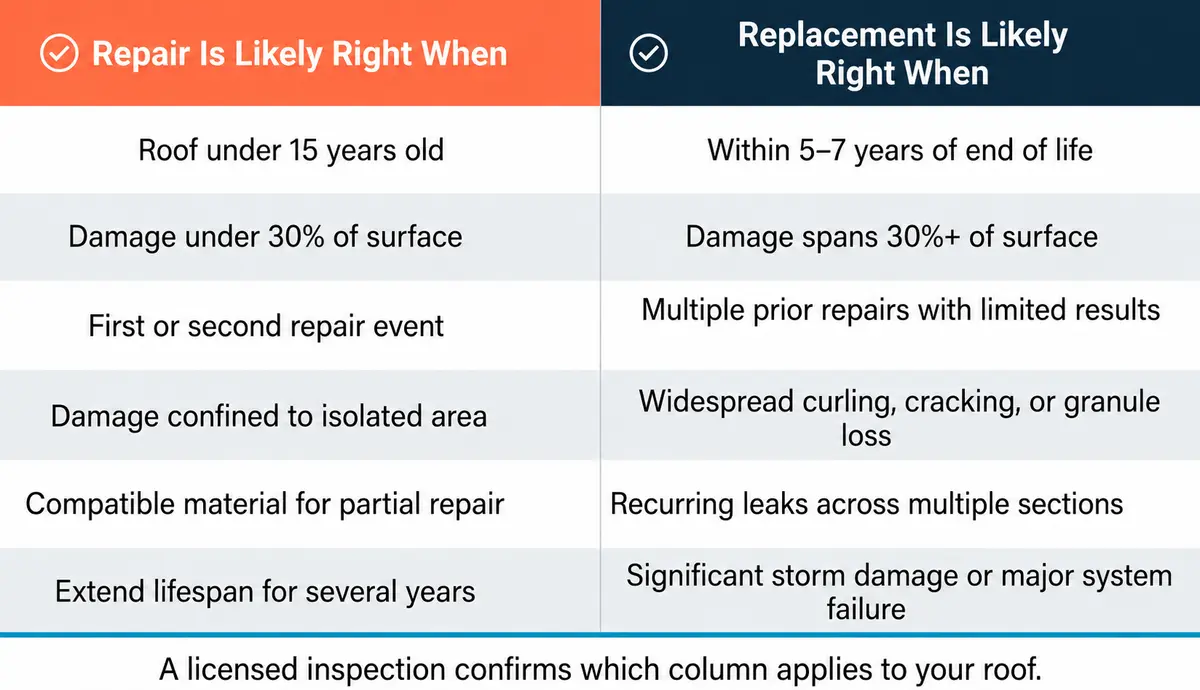
Two-column decision checklist comparing six conditions that favor roof repair on the left versus six conditions that indicate full roof replacement is necessary on the right, with a note that a licensed inspection confirms which applies.

Repair or Replacement: Decision Checklist

Use this checklist before scheduling a roof inspection. It does not replace a professional assessment, but it frames the factors that drive the recommendation.

Repair Is Likely the Right Choice When:

  • Roof is under 15 years old (asphalt shingles) or under 25 years (metal or membrane)
  • Damage is limited to one slope or one penetration point
  • No structural damage or compromised decking
  • First or second repair event — no pattern of recurring leaks
  • Shingle match is achievable for the affected area
  • Insurance covers the event and the scope is clearly defined

Replacement Is Likely the Right Choice When:

  • Roof is within 5 to 7 years of expected end of service life
  • Damage spans 30 percent or more of the surface
  • Multiple prior repairs in the same area with limited results
  • Structural damage present: rotted decking, failed underlayment, or compromised rafters
  • Leaks continue after previous repair attempts
  • Shingle matching is not achievable and appearance matters
  • An insurance adjuster has authorized full roof replacement

When Is Full Roof Replacement Unavoidable?

Some conditions make the repair-versus-replace discussion irrelevant. These are the scenarios where experienced contractors recommend replacement regardless of a homeowner’s preference for a simple repair.

Structural Damage to the Deck

Structural damage is the clearest trigger. When water has moved through shingles and underlayment and reached the deck, the underlying structure is compromised. Completing an asphalt shingle roof installation over rotted decking is not a viable repair — it is a liability. The damaged material must be removed before any new roofing materials go on. This is, by definition, a full roof replacement.

Widespread Damage Across the Roof

Widespread damage from a major storm or extended neglect often makes targeted repair economically irrational. When damage is distributed across multiple slopes, the repair cost approaches or exceeds replacement — while replacement delivers a complete new system backed by full manufacturer warranty. Reputable contractors present both scopes with line-item estimates so homeowners can make an informed call.
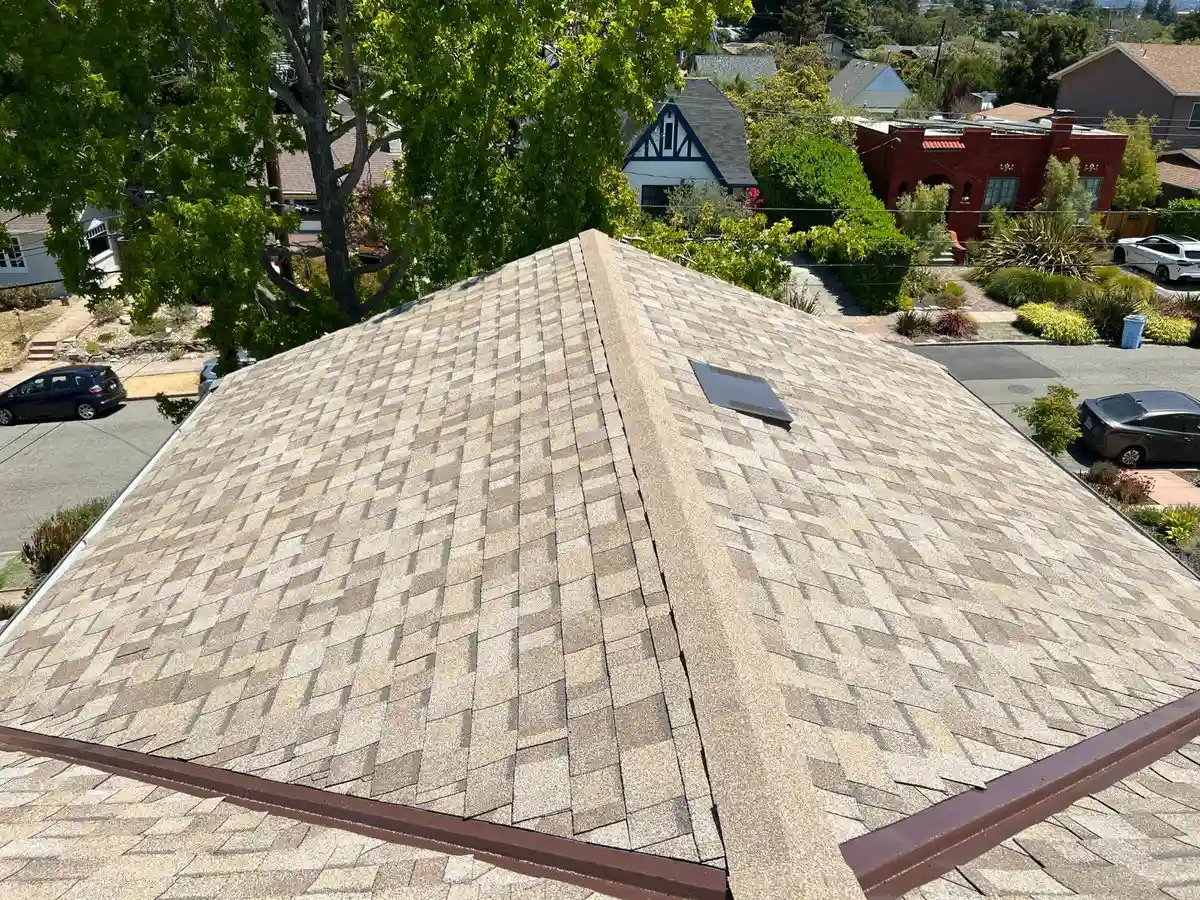
Aerial view of an aging asphalt shingle roof on a residential home in Marin County showing uneven granule coverage and signs of weathering across multiple slopes.

End-of-Life Roofs and Significant Granule Loss

An old roof that has lost granule coverage across the field is past the point where roof repair fixes the underlying problem. Granule loss accelerates UV breakdown of the asphalt layer. When bare spots are visible and granules are collecting in the gutters, replacement decisions are not premature — they are overdue. A patch on this substrate will not hold.

Insurance-Authorized Replacement

Insurance adjusters assess storm damage against replacement cost value (RCV) or actual cash value (ACV) policy terms. When the adjuster’s scope supports full replacement, homeowners are entitled to that scope. Accepting a repair settlement when complete roof replacement has been authorized is not in the homeowner’s interest. Review the adjuster’s written scope with your roofing contractor before agreeing to any reduction in coverage.

How Marina Bay Roofing’s Inspection Process Helps

The right roofing contractor gives you the honest picture, not the answer you hope for. Marina Bay Roofing’s inspection process is built to give Marin County homeowners a complete view of their roof system before any scope is committed.

What Our Roof Inspection Covers

A professional roof inspection from Marina Bay Roofing covers the full set of factors that determine the right path:

  • Shingle condition across all slopes: granule coverage, cracking, curling, and displacement
  • Flashing integrity at penetrations, valleys, chimneys, and skylights
  • Underlayment condition at eaves and exposed transition points
  • Deck condition assessed from the attic interior where accessible
  • Ventilation adequacy — a primary driver of premature shingle failure in Marin County homes
  • Prior repair locations: how many, where, and whether they are holding

Free Roof Inspection for Marin County Homeowners

Marina Bay Roofing provides a free roof inspection for homeowners weighing their options. The inspection produces a written assessment — not a sales pitch — that documents current condition, repair history, and recommended scope. The goal is to give you a documented, honest baseline so your decision is grounded in the actual condition of the roof, not assumptions.
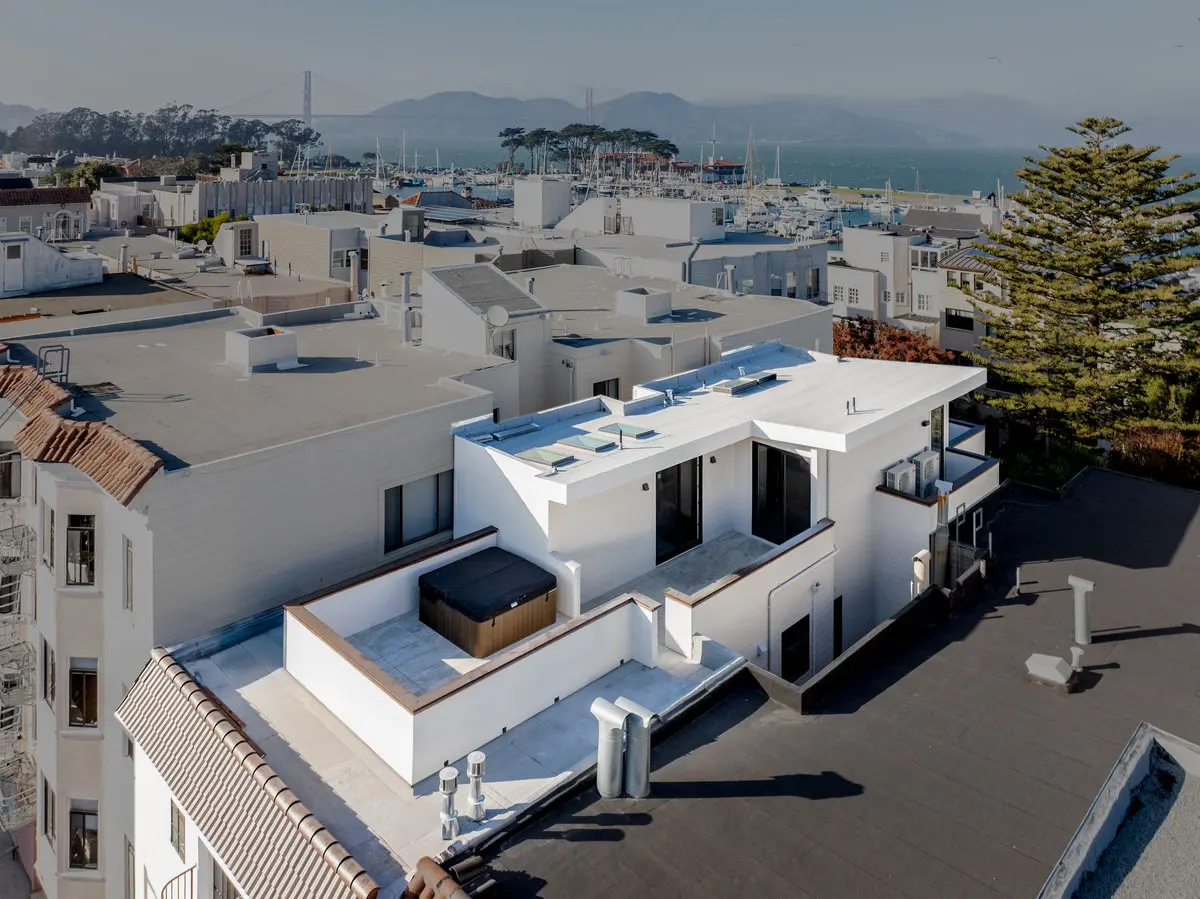
Aerial photo of a flat membrane roof on a residential property in the San Francisco Bay Area with a marina and coastal hillside visible in the background, illustrating a completed flat roof system.

Marin County-Specific Maintenance Factors

Marin County’s marine layer drives chronic moisture exposure that accelerates granule loss on south-facing slopes, degrades flashing sealants faster than inland climates, and promotes moss growth that retains moisture against the shingle surface. These factors are not visible from the street. They require a trained inspection at roof level and in the attic.

Marina Bay Roofing’s inspectors understand local permit requirements and building codes governing roof replacement across Marin County communities. When full replacement is the right call, we handle the permit process as part of the project.

What Comes After the Inspection

Following the assessment, we provide a written summary that includes:

  • Current roof condition by section with supporting photos
  • Repair scope if repair is appropriate: materials, labor, and timeline
  • Replacement scope if recommended: system options, materials, timeline, and warranty terms
  • Insurance guidance if the damage scope may support a claim

Schedule Your Free Roof Inspection Today

If you are evaluating roof repair vs. replacement for your Marin County home, the first step is an honest, documented assessment from a licensed roofing contractor with local expertise.

Marina Bay Roofing serves homeowners throughout Marin County and the San Francisco Bay Area — San Rafael, Mill Valley, Novato, Sausalito, Tiburon, Corte Madera, and surrounding communities. Schedule your free roof inspection today.

Views: 4

Search ideas & guides for your remodel

Sign up for our newsletter

Subscribe to receive the latest blog posts to your inbox every week.

Newsletter

Consent

By subscribing you agree to with our Privacy Policy.

Recent Posts

  • All Posts
  • Commercial Roofing
  • Home Restoration
  • Roof Inspection
  • Roof Installation
  • Roof Repair
  • Roof Replacement
Aerial view of a hillside home with a dark asphalt shingle roof, solar panels, and wood decks surrounded by trees.

Insurance and Roof Claims Guide

Five-step infographic for choosing a roofing contractor in Marin County: verify the license, confirm insurance, check local experience, compare itemized estimates, and review ratings and warranty terms.

How to Choose a Roofing Contractor in Marin County

Infographic of a Marin County home mid-reroof beside the five roofing permit steps: confirm jurisdiction, submit application, plan review, roof work, and final inspection, with possible coastal, septic, and energy code reviews.

Roofing Permits in Marin County: What Homeowners Need to Know

Attic cross-section showing cool air entering soffit vents, passing through baffles over insulation, and warm air exiting a ridge vent.

Roof Ventilation & Attic Guide

Comparison chart of TPO, EPDM, and asphalt shingle roofing showing lifespan, energy reflectivity, and cost differences for flat vs. sloped roofs.

TPO & Flat Roofs in the Bay Area: Cost, Lifespan, and Repair vs. Replace

Map diagram showing an atmospheric river moisture band traveling from the tropical Pacific Ocean to the San Francisco Bay Area coastline.

How Atmospheric Rivers Damage Bay Area Roofs — What Homeowners Should Watch For

Diagram showing how Marin's marine layer fog causes granule loss, algae growth, and trapped attic moisture that shorten asphalt shingle roof life from 25–30 years to 10–15 years.

Why Asphalt Shingle Roofs Fail Early in Marin’s Marine-Layer Climate

Three-stage roof repair process diagram showing emergency repair, temporary repair, and permanent repair for Marin County roof leaks.

Roof Leak Triage in Marin: Emergency vs. Temporary vs. Permanent Repair

Hero infographic comparing overlay versus full tear-off roof replacement, showing shingle layers, deck inspection status, and cost differences.

The Re-Roofing Process: What to Expect, Overlay vs. Tear-Off

Share this post
  • Roof Repair
Picture of Michael Machkovsky
Michael Machkovsky
Michael serves as CEO at Marina Bay Roofing and brings seven years of hands-on roofing and construction experience to the team. Born and raised in the Bay Area, he’s dedicated to helping homeowners feel confident in the work protecting their homes. When he’s not on the job, you’ll find him spending time with his 7-year-old son.

Blog

Related posts

Lorem ipsum dolor sit amet, consectetur adipiscing elit.

Aerial view of a hillside home with a dark asphalt shingle roof, solar panels, and wood decks surrounded by trees.
Roof Inspection
Michael Machkovsky

Insurance and Roof Claims Guide

Filing a roof insurance claim is one of the most

Read More »
October 27, 2026
Five-step infographic for choosing a roofing contractor in Marin County: verify the license, confirm insurance, check local experience, compare itemized estimates, and review ratings and warranty terms.
Roof Installation
Michael Machkovsky

How to Choose a Roofing Contractor in Marin County

Marin County homeowners eventually face the same question: how do

Read More »
October 26, 2026
Infographic of a Marin County home mid-reroof beside the five roofing permit steps: confirm jurisdiction, submit application, plan review, roof work, and final inspection, with possible coastal, septic, and energy code reviews.
Roof Installation
Michael Machkovsky

Roofing Permits in Marin County: What Homeowners Need to Know

Getting a permit in Marin County follows a process that

Read More »
October 26, 2026
View All

Sign up for our newsletter

Join Our Community for Updates and roof renovation Insights

Newsletter

Consent

Ready to imagine your own project?

Request Your Personalized Consultation

and let’s talk about your space, your ideas, and how we can bring them to life.

Quick links
  • Home
  • About
  • Roofing Services
  • Commercial Roofing
  • Materials
  • Gallery
  • FAQ
  • Blog
  • contact
Services
  • Roof Inspection
  • Roof Installation
  • Roof Repair
  • Roof Replacement
  • Skylight Installation
Contact Us

Locations:
4411 Geary Blvd #301
San Francisco, CA 94118
Phone: (628) 233-8140

710 C Street Suite 208
San Rafael, CA 94901
Phone: (415) 860-7257

Email: [email protected]

License & Certifications

State Contractor License #1133789

Fully Licensed • Bonded • Insured

Find Us on Map

Proudly serving our community with honesty, craftsmanship, and care.

© 2026Marina Bay Roofing Inc.

Privacy Policy

Terms of Service

Facebook-f Yelp Instagram