Skip to content

Get an Instant Roof Cost Estimate →

Need a new roof or repairs?

  • Call (628) 233-8140
  • Home
  • About
    • Who We Are
    • Why Choose Us?
  • Roofing Services
    • Roof Inspection
    • Roof Installation
    • Roof Repair
    • Roof Replacement
    • Skylight Installation
  • Commercial
    • Commercial Roofing Contractors
    • Commercial Roof Installation
    • Commercial Roof Repairs
  • Materials
    • Asphalt Shingles
    • Metal Roof Panels
    • Clay & Concrete Tiles
    • Skylight Installation
    • TPO Flat Roof
    • Flat Roof Contractors
    • Flat Roof Repair
    • Flat Roof Installers
  • Service Area

    San Francisco Bay Area

    • Alamo
    • Belmont
    • Berkeley
    • Burlingame
    • Danville
    • Dublin
    • Fremont
    • Los Gatos
    • Millbrae
    • Milpitas
    • Oakland
    • Orinda
    • Palo Alto
    • Piedmont
    • Pleasanton
    • Pleasant Hill
    • Redwood City
    • Richmond
    • San Bruno
    • San Carlos
    • San Francisco
    • San Jose
    • San Leandro
    • San Lorenzo
    • San Mateo
    • San Pablo
    • San Ramon
    • South San Francisco
    • Walnut Creek

    Marin County

    • Belvedere
    • Corte Madera
    • Fairfax
    • Kentfield
    • Larkspur
    • Mill Valley
    • Novato
    • Ross
    • San Anselmo
    • San Rafael
    • Sausalito
    • Tiburon
    • Tamalpais-Homestead Valley
  • Roof Cost Calculator
  • Gallery
  • FAQs
  • Blog
Contact
  • Roof Repair

How Atmospheric Rivers Damage Bay Area Roofs — What Homeowners Should Watch For

Michael Machkovsky

  • Roof Repair
Map diagram showing an atmospheric river moisture band traveling from the tropical Pacific Ocean to the San Francisco Bay Area coastline.

Bay Area weather forecasts increasingly lead with the same phrase every winter: an atmospheric river is on the way. These storms bring some of the heaviest rain and strongest winds the region sees all year, and they’re responsible for a large share of the roof damage homeowners deal with each storm season. Understanding how an atmospheric river actually damages a roof helps homeowners catch problems early instead of discovering them mid-storm.

This guide explains what an atmospheric river is, why the Bay Area and the broader West Coast are especially exposed, and exactly what to watch for on your own roof before, during, and after one of these storms hits.

Quick Answers to FAQs

How do atmospheric rivers damage Bay Area roofs specifically?

Sustained heavy rain saturates roofing materials and overwhelms drainage, while high winds and occasional hail stress shingles and flashing, often working together to cause the most damage.

Are atmospheric rivers the same as hurricanes?

No. Atmospheric rivers are bands of concentrated water vapor and are more closely related to extratropical cyclones than tropical storm systems, though both can bring severe weather.

How much rain can an atmospheric river bring to California?

A strong atmospheric river can deliver several inches of rainfall in a day or two, contributing heavily to a region’s annual precipitation in a short window.

Should I inspect my roof before atmospheric river season?

Yes. A pre-season inspection catches loose shingles, clogged gutters, and flashing issues before an atmospheric river arrives and turns a minor issue into real damage.

Does climate change affect how often atmospheric rivers hit the Bay Area?

Many climate researchers expect atmospheric rivers to become more intense as ocean warming continues, even if the total number of storms doesn’t change dramatically.

How Atmospheric Rivers Damage Roofs

An atmospheric river is a long, narrow band of concentrated water vapor in the atmosphere that funnels moisture from the tropics toward the West Coast, releasing it as heavy rain and rainfall once it reaches California. For roofs, that means sustained heavy precipitation, high winds, and hours of saturation that can lift shingles, overwhelm gutters, and force water into gaps a lighter storm would never find. Flooding, debris flow on hillside properties, and wind-driven damage are the most common roof-related impacts homeowners report after a strong atmospheric river.

What Is an Atmospheric River?

An atmospheric river is essentially a river of water vapor moving through the atmosphere, sometimes carrying more water than the Mississippi River carries at its mouth. These moisture plumes form over the tropics and stretch thousands of miles across the Pacific before making landfall along the West Coast, releasing much of that moisture as rain and rainfall once they hit the coastal mountains of California. The strength of an atmospheric river is often ranked on a scale similar to hurricane categories, running from weak systems that bring welcome rain to extreme events capable of record-setting precipitation totals over just a few days. A weaker atmospheric river might pass through with modest rain and little disruption, while a strong one can rival the total rainfall of an entire ordinary month.

Atmospheric rivers aren’t the same as a hurricane or tornado — they’re a distinct category of extreme weather, more closely related to extratropical cyclones than tropical systems, but capable of delivering extreme rainfall totals in a short window. The National Weather Service forecast for a strong atmospheric river often includes inches of rain over just a day or two.

Aerial view of dense San Francisco Bay Area rooftops with the downtown skyline in the background.

Why the Bay Area and West Coast Are Especially Vulnerable

The San Francisco Bay Area sits directly in the path of many atmospheric rivers moving in off the Pacific each winter, making it one of the more exposed parts of the West Coast for this kind of storm. San Francisco and the surrounding coast regularly see a significant share of their annual precipitation arrive during just a handful of atmospheric river events each season.

Watersheds throughout Northern California funnel that concentrated rainfall quickly, which is part of why flooding and debris flow become real concerns even from storms that pass through in a day or two. Strong winds accompanying these systems add a second layer of risk on top of the rain itself.

How Atmospheric River Storms Damage Roofs

Roof damage during an atmospheric river usually comes from a combination of factors working together rather than any single cause. Heavy rain sustained over many hours saturates roofing materials and overwhelms gutters and drainage, while high winds and occasional hail put additional stress on shingles, flashing, and vents. Severe storms with strong winds can lift or crack roofing materials that would otherwise hold up fine in ordinary rain.

The water cycle during an atmospheric river also means saturated ground and swollen watersheds can contribute to roof and foundation issues even after the rain itself has stopped, as runoff and standing water continue to find their way into vulnerable areas of a property.

Flooding, Debris Flow, and Water Extremes

Atmospheric rivers are known for producing genuine water extremes — moving quickly from drought conditions to significant flooding within the same storm system. Flooding around a home’s roofline, gutters, and foundation is one of the most common consequences, along with debris flow risk on sloped properties where saturated soil and vegetation can no longer hold in place. Localized flooding tends to show up first in areas with poor drainage: low points in a yard, undersized gutters, or downspouts that empty too close to the foundation. When heavy rainfall arrives faster than a property’s drainage system can move it, flooding can back water up against the base of exterior walls and, in older homes, occasionally into crawl spaces beneath the roofline itself.

These flood risks compound roof damage indirectly: water that can’t drain properly backs up under shingles and flashing, turning a routine storm into a source of interior damage as well. Flooding downstream of a property can also affect access for repair crews in the days immediately following a major atmospheric river, which is one more reason addressing minor roof issues before flooding season begins is worth the effort.
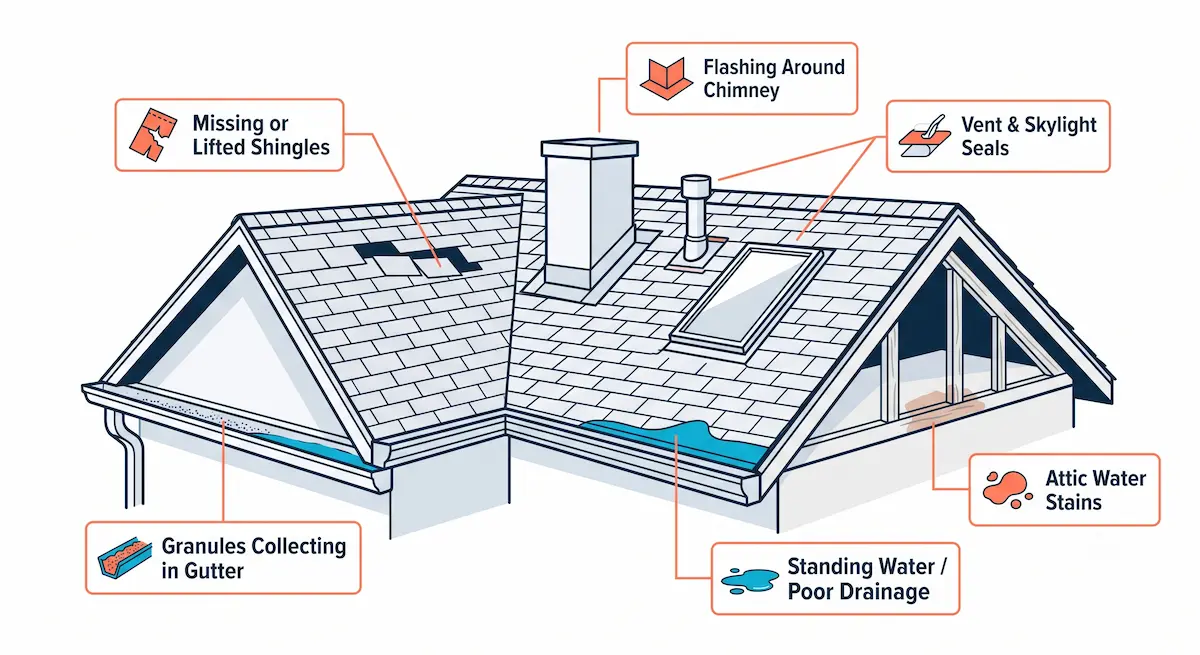
Annotated diagram of a roof showing storm damage inspection points: shingles, gutters, flashing, vents, and attic water stains.

Signs of Roof Damage Homeowners Should Watch For

After an atmospheric river passes, homeowners should check for missing or lifted shingles, granules collected in gutters, water stains on ceilings, and any debris lodged on the roof surface from high winds. Standing water anywhere on the roof, rather than clear drainage, is a sign gutters or roof pitch need attention before the next storm arrives.

It’s also worth checking the attic soon after a storm, since a slow leak from wind-driven rain often shows up there before it reaches a visible ceiling stain. A flashlight check around chimneys, vents, and skylights takes only a few minutes and can catch a developing problem well before the next atmospheric river brings another round of heavy rain to the region.

Atmospheric Rivers, Climate Change, and What’s Ahead

Climate change is expected to intensify atmospheric river activity along the West Coast, with warming ocean temperatures feeding more water vapor into these systems and increasing the odds of catastrophic impacts from extreme rainfall events. Climate researchers generally expect California’s future storm seasons to bring fewer, more intense atmospheric rivers rather than steady, moderate rainfall spread evenly across winter.

For homeowners, that trend means roof maintenance and storm-readiness matter more over time, not less, as western weather patterns continue shifting toward these concentrated, high-impact events.
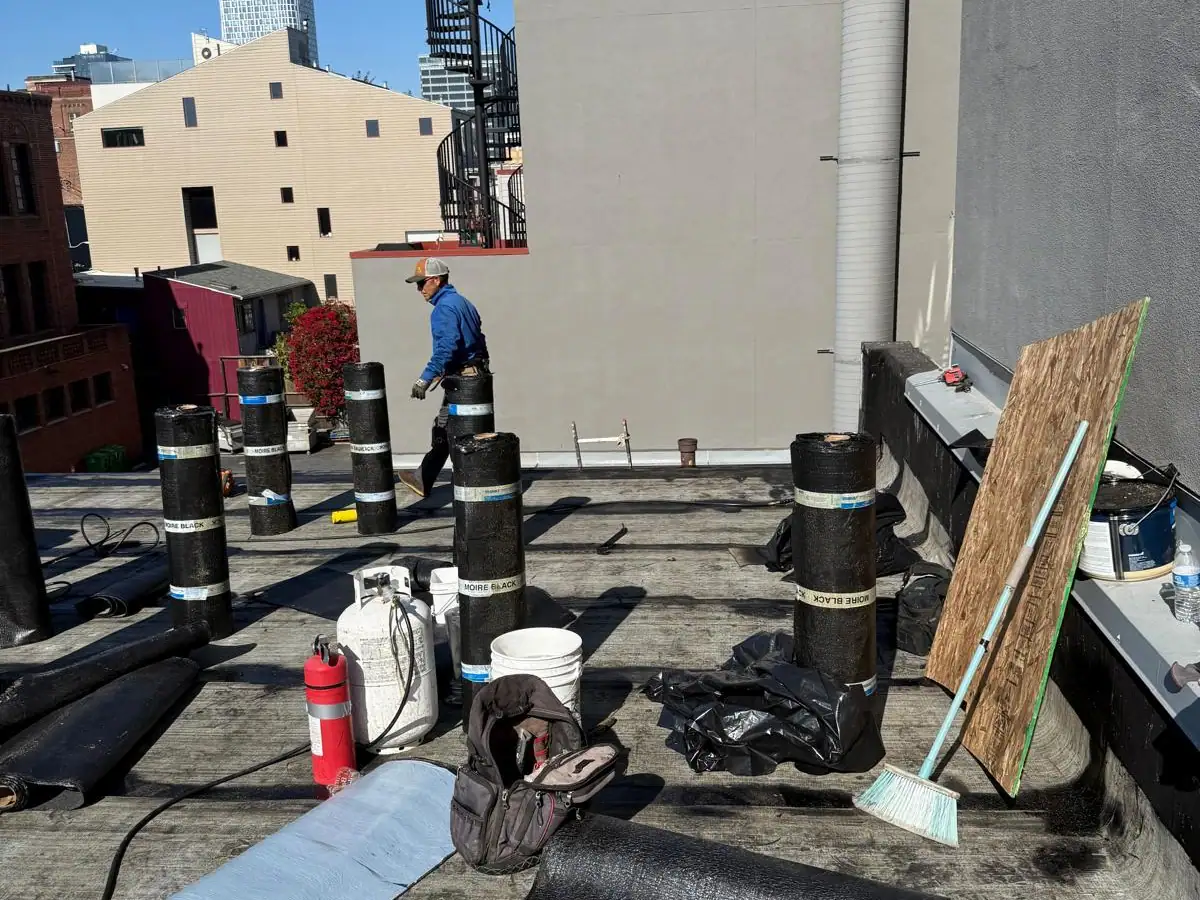
Roofing contractor working on a flat commercial roof with rolled underlayment material during a re-roofing project.

Protecting Your Roof Before the Next Atmospheric River

Understanding how atmospheric rivers damage roofs is the first step toward protecting your home. Clear gutters, trim overhanging trees, and schedule a roof inspection before storm season builds, so your roof is ready when the next atmospheric river reaches the Bay Area.

 

Views: 4

Search ideas & guides for your remodel

Sign up for our newsletter

Subscribe to receive the latest blog posts to your inbox every week.

Newsletter

Consent

By subscribing you agree to with our Privacy Policy.

Recent Posts

  • All Posts
  • Commercial Roofing
  • Home Restoration
  • Roof Inspection
  • Roof Installation
  • Roof Repair
  • Roof Replacement
Aerial view of a hillside home with a dark asphalt shingle roof, solar panels, and wood decks surrounded by trees.

Insurance and Roof Claims Guide

Five-step infographic for choosing a roofing contractor in Marin County: verify the license, confirm insurance, check local experience, compare itemized estimates, and review ratings and warranty terms.

How to Choose a Roofing Contractor in Marin County

Infographic of a Marin County home mid-reroof beside the five roofing permit steps: confirm jurisdiction, submit application, plan review, roof work, and final inspection, with possible coastal, septic, and energy code reviews.

Roofing Permits in Marin County: What Homeowners Need to Know

Attic cross-section showing cool air entering soffit vents, passing through baffles over insulation, and warm air exiting a ridge vent.

Roof Ventilation & Attic Guide

Comparison chart of TPO, EPDM, and asphalt shingle roofing showing lifespan, energy reflectivity, and cost differences for flat vs. sloped roofs.

TPO & Flat Roofs in the Bay Area: Cost, Lifespan, and Repair vs. Replace

Map diagram showing an atmospheric river moisture band traveling from the tropical Pacific Ocean to the San Francisco Bay Area coastline.

How Atmospheric Rivers Damage Bay Area Roofs — What Homeowners Should Watch For

Diagram showing how Marin's marine layer fog causes granule loss, algae growth, and trapped attic moisture that shorten asphalt shingle roof life from 25–30 years to 10–15 years.

Why Asphalt Shingle Roofs Fail Early in Marin’s Marine-Layer Climate

Three-stage roof repair process diagram showing emergency repair, temporary repair, and permanent repair for Marin County roof leaks.

Roof Leak Triage in Marin: Emergency vs. Temporary vs. Permanent Repair

Hero infographic comparing overlay versus full tear-off roof replacement, showing shingle layers, deck inspection status, and cost differences.

The Re-Roofing Process: What to Expect, Overlay vs. Tear-Off

Share this post
  • Roof Repair
Picture of Michael Machkovsky
Michael Machkovsky
Michael serves as CEO at Marina Bay Roofing and brings seven years of hands-on roofing and construction experience to the team. Born and raised in the Bay Area, he’s dedicated to helping homeowners feel confident in the work protecting their homes. When he’s not on the job, you’ll find him spending time with his 7-year-old son.

Blog

Related posts

Lorem ipsum dolor sit amet, consectetur adipiscing elit.

Aerial view of a hillside home with a dark asphalt shingle roof, solar panels, and wood decks surrounded by trees.
Roof Inspection
Michael Machkovsky

Insurance and Roof Claims Guide

Filing a roof insurance claim is one of the most

Read More »
October 27, 2026
Five-step infographic for choosing a roofing contractor in Marin County: verify the license, confirm insurance, check local experience, compare itemized estimates, and review ratings and warranty terms.
Roof Installation
Michael Machkovsky

How to Choose a Roofing Contractor in Marin County

Marin County homeowners eventually face the same question: how do

Read More »
October 26, 2026
Infographic of a Marin County home mid-reroof beside the five roofing permit steps: confirm jurisdiction, submit application, plan review, roof work, and final inspection, with possible coastal, septic, and energy code reviews.
Roof Installation
Michael Machkovsky

Roofing Permits in Marin County: What Homeowners Need to Know

Getting a permit in Marin County follows a process that

Read More »
October 26, 2026
View All

Sign up for our newsletter

Join Our Community for Updates and roof renovation Insights

Newsletter

Consent

Ready to imagine your own project?

Request Your Personalized Consultation

and let’s talk about your space, your ideas, and how we can bring them to life.

Quick links
  • Home
  • About
  • Roofing Services
  • Commercial Roofing
  • Materials
  • Gallery
  • FAQ
  • Blog
  • contact
Services
  • Roof Inspection
  • Roof Installation
  • Roof Repair
  • Roof Replacement
  • Skylight Installation
Contact Us

Locations:
4411 Geary Blvd #301
San Francisco, CA 94118
Phone: (628) 233-8140

710 C Street Suite 208
San Rafael, CA 94901
Phone: (415) 860-7257

Email: [email protected]

License & Certifications

State Contractor License #1133789

Fully Licensed • Bonded • Insured

Find Us on Map

Proudly serving our community with honesty, craftsmanship, and care.

© 2026Marina Bay Roofing Inc.

Privacy Policy

Terms of Service

Facebook-f Yelp Instagram