How the roof insurance claim process works
A roof insurance claim generally starts the same way regardless of the insurance company involved: damage occurs, the homeowner documents it, a claim is filed, someone inspects the property, and a settlement is reached before repairs begin. Things can move quickly for a straightforward case or stretch over weeks when a claim’s scope or cause is disputed.
Understanding the sequence ahead of time gives a homeowner a real advantage over learning it during an active situation. Most insurance policy language is written for the insurer’s benefit first, and a homeowner who knows what to expect at each stage is far less likely to accept a low settlement out of confusion or urgency.
A roof damage insurance claim differs from other property claims in one important way: roof damage is not always visible from inside the home, so a homeowner often has to rely on a professional’s assessment just to know a claim is worth filing. This is part of why an insurance adjuster’s inspection carries so much weight in the outcome, and why a homeowner’s own documentation matters just as much.
What homeowners insurance typically covers
Homeowners insurance typically covers accidental roof damage from sudden, identifiable events: hail damage, wind exposure, a fallen tree limb, or fire. A standard policy generally does not cover roof damage caused by age, neglect, or a lack of routine maintenance, since ordinary wear falls outside what home insurance is designed to address.
Coverage details vary by policy and insurer, so the specific terms of service in your own documents matter more than any general guideline. Ask your insurance agent directly whether specific damage is covered before assuming either way, since two seemingly similar cases can have very different outcomes depending on exact policy language.
A common question is whether coverage extends to a slow drip the same way it covers sudden wind exposure. It depends on what caused the water intrusion, and water reaching the interior of the home does not settle the question. Water damage from a burst pipe is typically treated differently than gradual seepage that developed over months, even though both soak the same ceiling.
A complete teardown-and-redo is rarely the starting assumption for any situation. Most policies are written to cover the specific area affected, with a full rebuild approved only when the damage is extensive enough, or old enough in combination with new damage, that a partial repair would not reasonably restore the roof to its prior condition.
The claim process
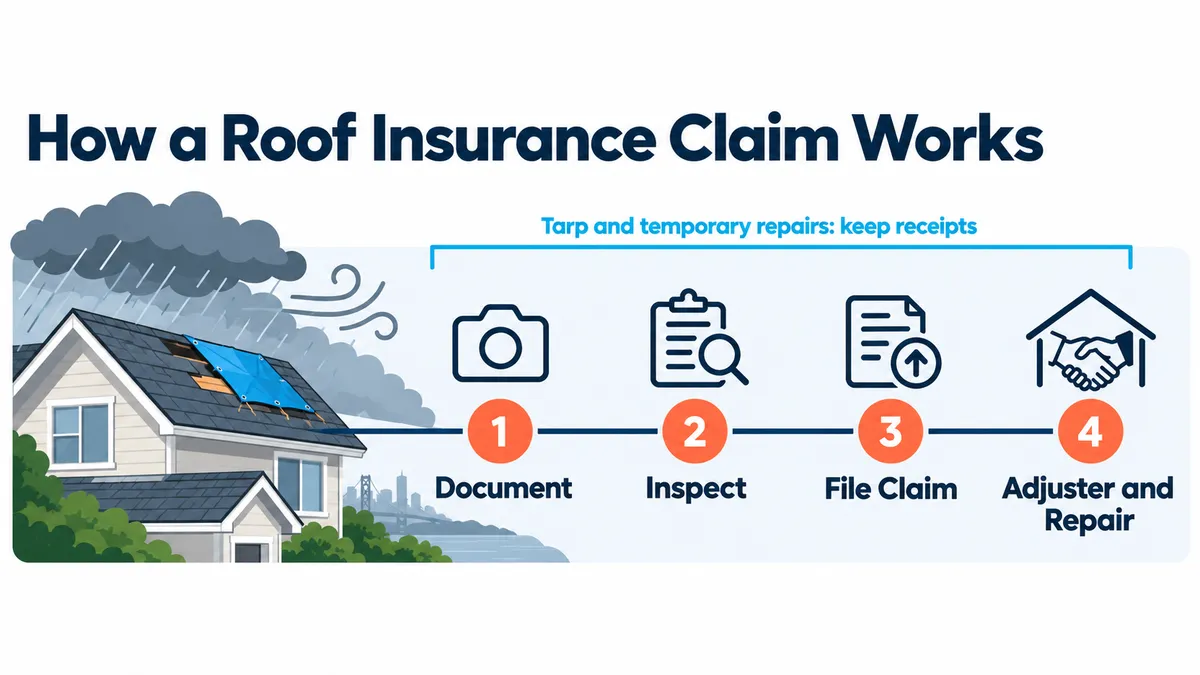
Every roof damage claim follows a similar sequence, though the details shift depending on the insurer and the type of damage involved.
Step 1: Document the damage
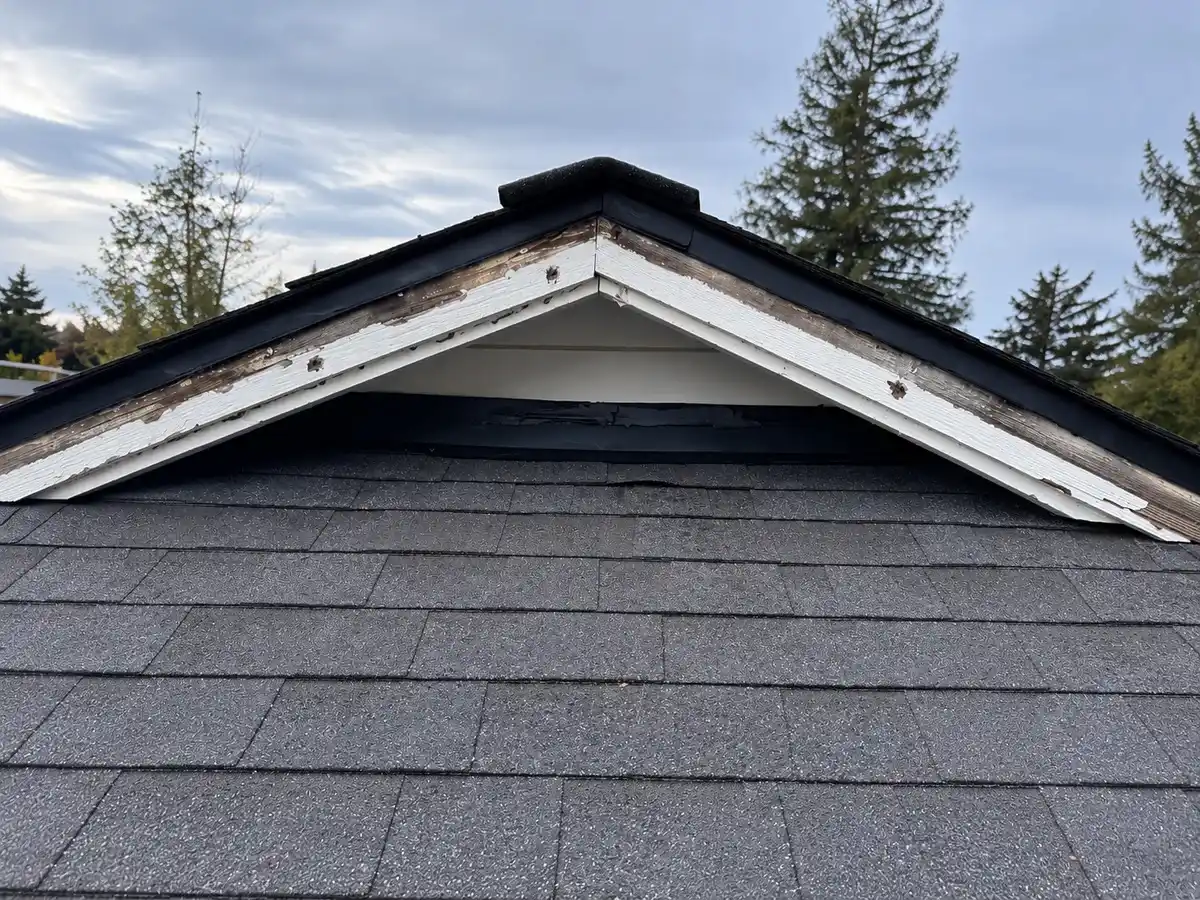
Photograph visible damage from the ground as soon as it is safe to do so, and stay off the roof yourself.
Note the date of the event, and keep any customer and expert messages exchanged with a contractor as part of the record. This record supports the entire claim.
Step 2: Schedule a roof inspection
A roofer should look at the roof before or shortly after filing.
A professional visit catches roof issues an untrained eye misses and gives the homeowner an independent account of the damage, separate from whatever the insurer’s own representative later reports.
Step 3: File the claim
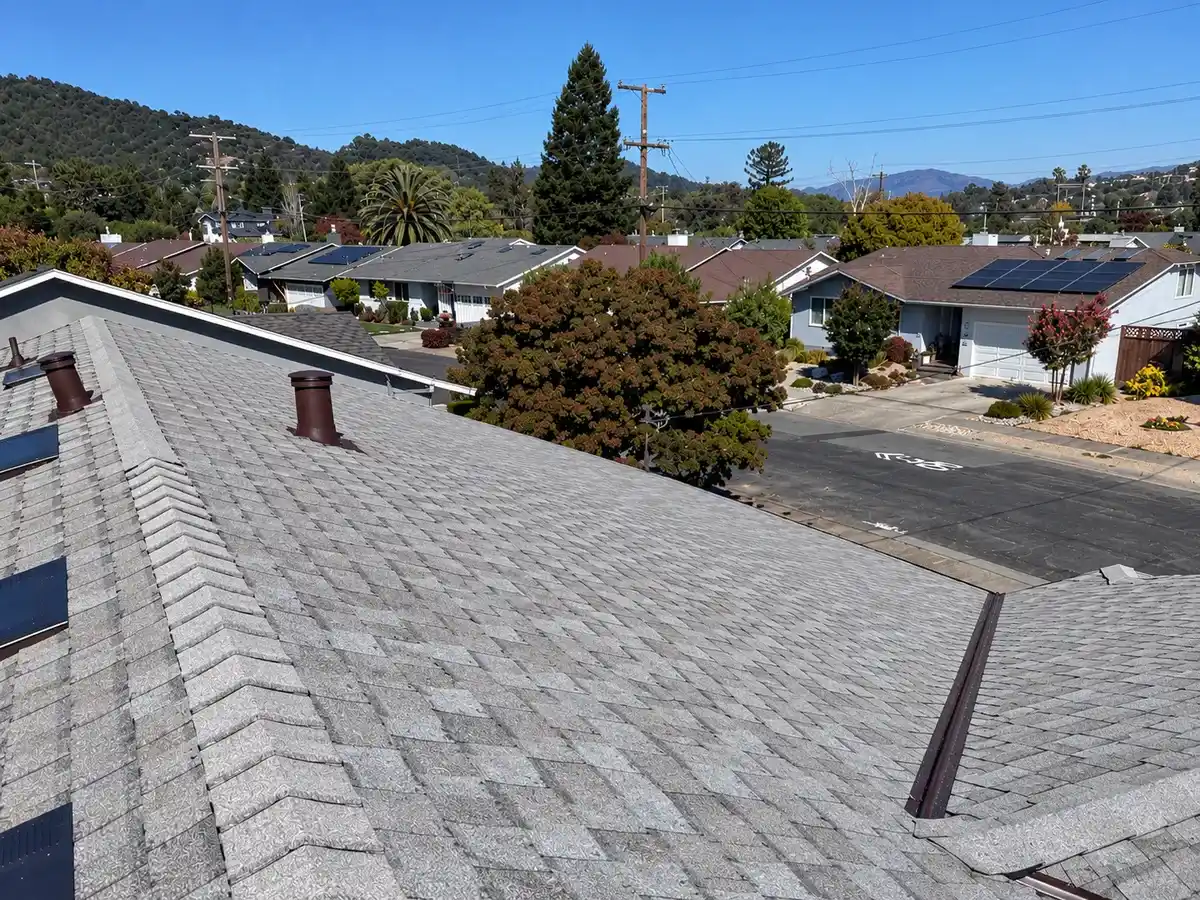
Contact the insurance company promptly once damage is confirmed.
Provide the records gathered earlier, along with a general description of the damage and when it occurred. Most insurers set a window for reporting, so prompt filing protects the homeowner’s position from the start.
Step 4: Meet the adjuster and complete repairs
The adjuster inspects the property to confirm the cause and scope of damage, then a settlement covering approved work is issued, whether that means a full roof replacement or a smaller repair scope. Homeowners should ask directly whether the settlement assumes a complete roof replacement or a partial one, since that distinction affects both the contractor scope and the final check amount homeowners receive.
A licensed contractor then completes the approved work, and any temporary repairs made earlier, like a tarp over an exposed section, are typically reimbursable as part of the claim.
Working with a public adjuster
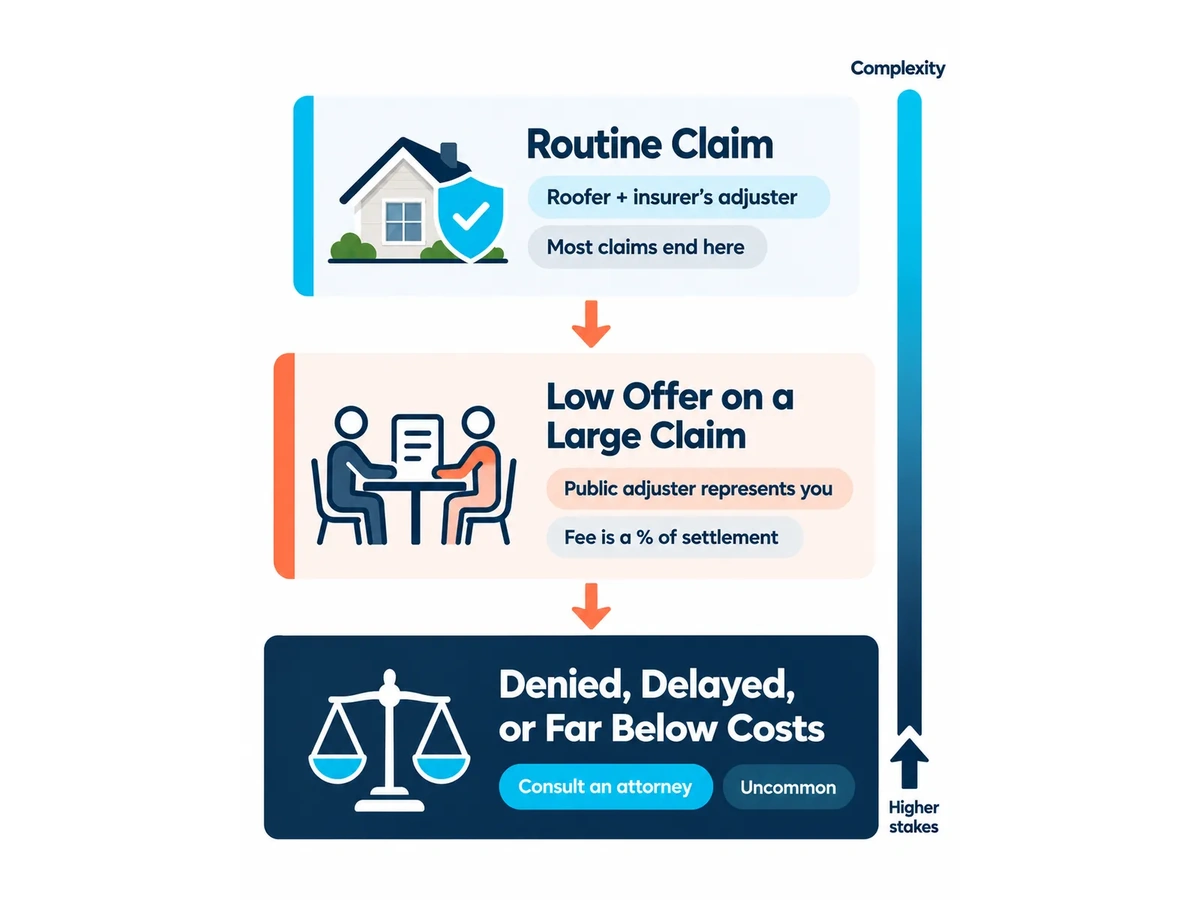
A public adjuster represents the homeowner. That sets the role apart from the insurance company’s own adjuster, whose job is to assess the claim on the insurer’s behalf, even when that adjuster is professional and fair throughout the process. The public adjuster reviews the same roof damage and negotiates on the property owner’s behalf when a settlement seems too low.
Hiring one usually involves a percentage-based fee taken from the settlement, so it tends to make the most financial sense on larger or disputed matters. Routine ones rarely justify the fee. A homeowner comparing quotes on a complete roof replacement, for example, might find that a second opinion closes a meaningful gap between the insurer’s first offer and what the actual roof insurance claim is worth.
When to consult a lawyer
Most roof insurance claims resolve without legal involvement.
An attorney becomes worth consulting when a claim is denied outright, delayed for an extended period without explanation, or settled far below documented repair costs. A lawyer familiar with real estate law or consumer protection law in your state can advise on whether a denial was handled in good faith, and can help if a dispute escalates toward litigation, which is uncommon but does happen on larger or higher-value matters.
A customer does not need a lawyer for a routine roof insurance claim that proceeds normally from inspection to settlement. The value of one shows up specifically in disputed cases, where a letter alone sometimes prompts an insurer to revisit a decision it might not have reconsidered otherwise.
Disclaimer: this guide is not legal advice. Any homeowner facing a contested matter should consult a licensed attorney about their specific situation, because general information cannot account for it.
Preventing further damage after a storm
Insurance policies generally expect a homeowner to take reasonable steps to prevent additional harm once an initial event occurs, such as a temporary tarp over an exposed section after storm damage. This expectation applies whether the original event was hail, wind, or a fallen branch, and it holds regardless of how the roof insurance claim itself is eventually resolved.
Failing to act can give an insurer grounds to reduce a settlement, even on an otherwise valid case, since the same insurer can reasonably argue that damage which worsened afterward was preventable and not a direct result of the original event.
Emergency roof repair exists for this in-between period and stabilizes a property until the claim is settled and permanent work can begin. A contractor who understands insurance timelines will typically document the temporary fix separately from the permanent repair, since insurance companies want to see that the interim step was reasonable in scope.
Documentation that strengthens a claim
Photographs from before and after an event, a written inspection report, contractor estimates, and any correspondence with the insurance company all strengthen a roof insurance claim. A customer who keeps a running record throughout the process is in a far stronger position if a settlement is disputed than one who reconstructs it after the fact.
Keeping a simple folder, physical or digital, with every piece of documentation in one place saves significant time if a case is questioned or delayed later in the process. This same habit serves a homeowner well beyond a single roof insurance claim, since a documented service history also supports a future home sale or a subsequent situation years down the road.
Marina Bay Roofing works alongside homeowners throughout San Francisco and Marin County at every stage of a roof insurance claim, from the first look through final repairs. Each customer’s roof is a long-term relationship.
This page is intended for general education and reflects common patterns across the roofing and insurance industries; consult a licensed professional for anything specific to your policy or situation.