Why permits matter
A building permit confirms that new material and installation meet current code for the property’s specific zone, which matters more in Marin than in many parts of the state given the range of microclimates, hillside lots, and older housing stock across the region.
Skipping a required building permit can create problems later, when a lender or buyer’s inspector asks for records that do not exist, and that gap often surfaces in the middle of a sale.
An unpermitted roof job is a common surprise during escrow across Marin County, and it can delay closing, trigger a price renegotiation, or in some cases require the seller to pull a retroactive approval before the deal can move forward.
The permit process
The permit process in Marin County generally starts with an application describing the scope of work and the material involved, along with basic details about the structure, its age, and the square footage of roof being addressed.
Once submitted, plans are reviewed against Marin’s adopted building code before work can legally begin, and depending on the reviewer’s workload and the complexity of the project, that review can take anywhere from a few days to several weeks.
Simple repairs sometimes qualify for a faster review path, while a full reroof usually goes through standard review, since a complete replacement touches more of the structure and carries more code implications than patching a single section.
Building and Safety review
Marin County’s Building and Safety division reviews most unincorporated-area applications and handles everything from initial submission through final inspection once the work is complete.
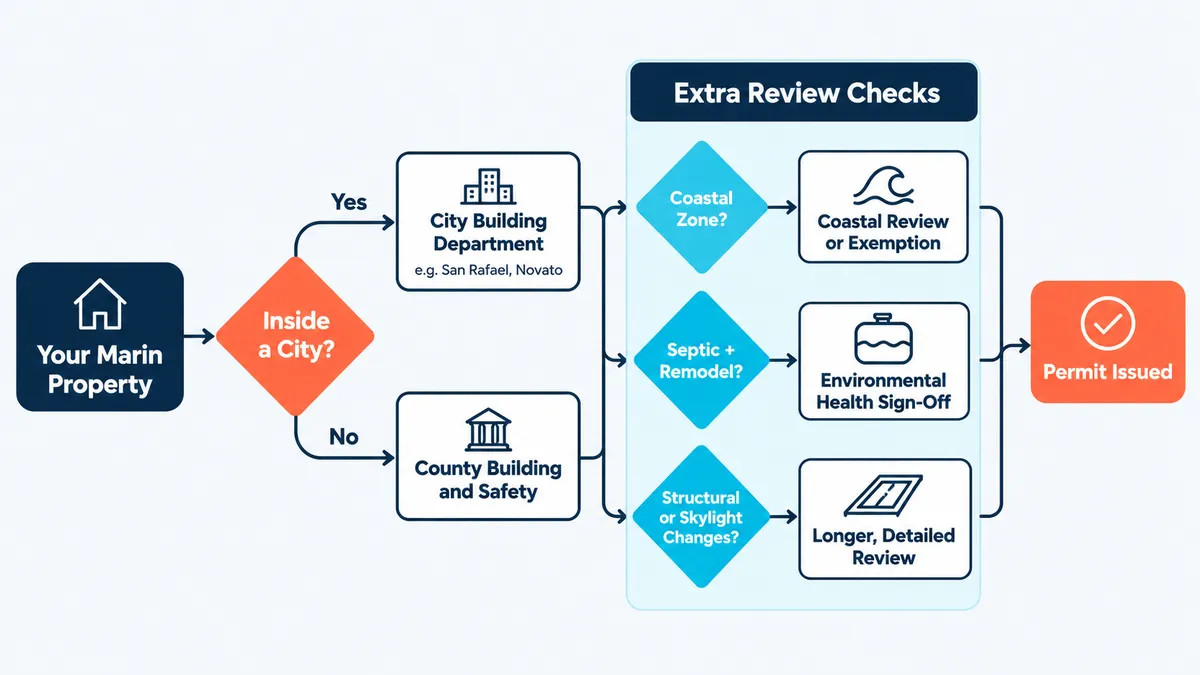
Properties inside an incorporated city, such as San Rafael or Novato, go through that city’s own department instead of the county office, and the forms, fees, and turnaround times can differ meaningfully from one jurisdiction to the next.
Knowing which building department has jurisdiction is the first real step. Confirm it directly, since jurisdictional boundaries in Marin do not always match what a homeowner expects based on their mailing address.
Applying for your permit
Applying for a reroof typically includes a scope of work, site plans, and material specifications, along with product data sheets for any new material being installed.
Missing documentation is the most common reason an application stalls, and reviewers will not typically move a file forward until every requested item has been submitted in full.
A complicated permit application usually involves more than the roof: structural changes, added skylights, or prior undocumented work on the property can all pull a routine reroof into a longer, more detailed review process.
Older homes, in particular, sometimes carry a permit history gap that surfaces once a new application is filed, since older remodels were not always documented the way current code requires.
Bring your plans up front
Bringing complete plans in early is the biggest factor in a fast approval, and it is the most controllable variable in the timeline. Filing something incomplete and revising later costs time.
Clear site plans and material specifications belong in the first submission to the building department. Adding them after a reviewer asks means another round of back-and-forth, and every round adds real time to an already unpredictable process.
Green building requirements
Green building rules apply to many reroof jobs and cover cool-roof reflectivity and insulation. They come from statewide energy code and are not unique to Marin.
Marin County enforces these standards alongside its own building code.
A contractor familiar with current rules can prevent delays, since a material that does not meet the reflectivity or insulation threshold can trigger a plan revision partway through review.
Environmental Health Services
Environmental Health Services becomes relevant when a roof job is part of a larger remodel on a property with a septic system, particularly in the more rural parts of Marin where municipal sewer service is not available.
An aging septic setup may need sign-off from that county department before other approvals, including a reroof, move forward, which can add an extra step for homeowners who did not expect their project to touch septic review at all.
Coastal Commission review
Properties within Marin’s coastal zone, including parts of Sausalito, Tiburon, and the outer coast, may fall under Coastal Commission review, an extra layer of oversight that does not apply to inland properties in the same county.
Many routine reroofs here qualify for an exemption from that additional layer of county review, particularly when the scope is limited to in-kind replacement with no change to the roof’s height, footprint, or visible profile.
Checking coastal zone status early avoids a late surprise for the property owner, since discovering a coastal review requirement partway through a project can add weeks to a timeline that otherwise would have moved quickly.
Local requirements across Marin
Requirements shift from one Marin city to the next, since each sets its own fees, format, and review timeline, and a process that feels routine in one town can feel unfamiliar in the next.
A homeowner in Fairfax may encounter a different process than one in Mill Valley for an identical scope of work, simply because the two cities structure their departments and review queues differently.
Confirming the correct building department before applying saves time later, and a quick phone call to check submission requirements is almost always worth the few minutes it takes.
Marina Bay Roofing works with Marin County homeowners on roofing permits and the work itself, from initial plans through final sign-off, so permitting and the actual work move forward together.