Average Roof Lifespan: How Long Do Different Roofing Materials Last?
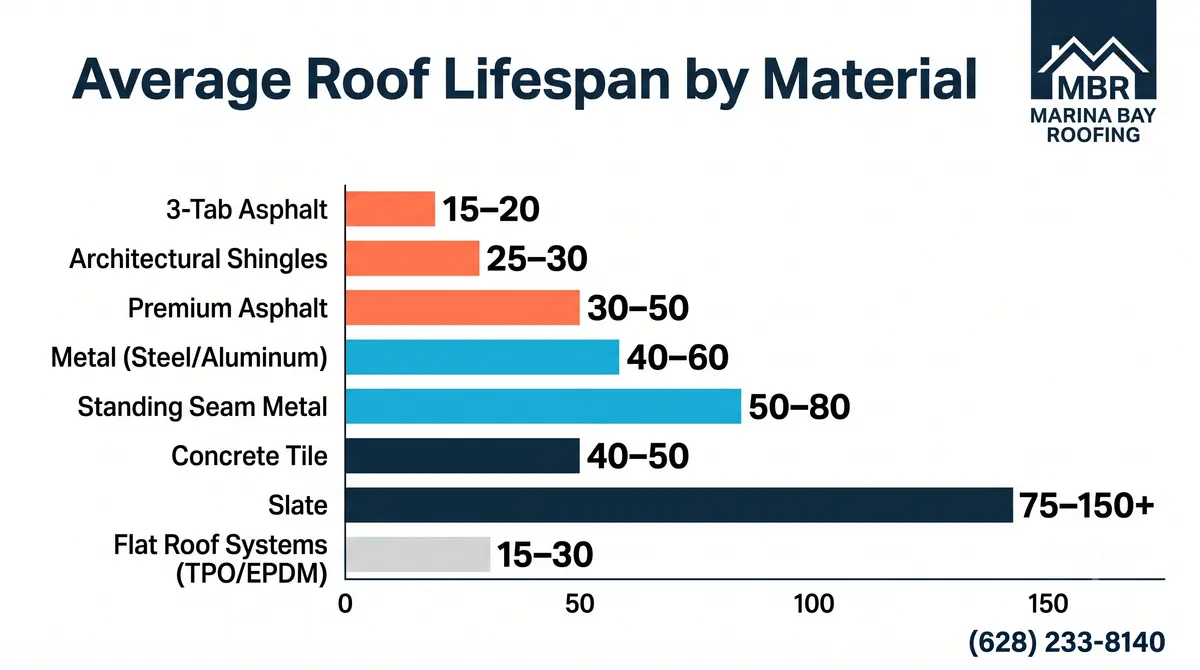
Not all roofing materials age at the same rate. The average roof lifespan varies significantly depending on what the roof is made of, how it was installed, and how well it has been maintained. Below is a practical lifespan guide for the most common roofing materials found in Bay Area and Marin County homes.
| Material |
Typical Lifespan |
Key Consideration |
| 3-Tab / Tab Asphalt Shingles |
15–20 years |
Entry-level material; least durable asphalt option |
| Architectural / Dimensional Shingles |
25–30 years |
Most common in Bay Area residential roofing |
| Premium Asphalt Shingles |
30–40 years |
Heavier profile; enhanced wind and moisture resistance |
| Metal Roofing (Steel / Aluminum) |
40–70 years |
Excellent longevity; low maintenance in coastal climates |
| Standing Seam Metal |
50+ years |
Premium performance; ideal for high-rainfall or fog zones |
| Concrete Tile Roofs |
40–50 years |
Heavy; requires verified structural support |
| Slate Roofing |
75–150+ years |
Longest lifespan; premium installation required |
| Wood Shingles / Wood Roofs |
20–30 years |
Requires regular treatment; fire risk in WUI zones |
| Flat Roof Systems (TPO / EPDM / Modified Bitumen) |
15–30 years |
Maintenance-dependent; prone to ponding without slope |
How Long Do Asphalt Shingles Last?
Asphalt shingles are the most popular roofing material in the United States, and they account for the majority of residential roofs across Marin County and the Bay Area. Their lifespan ranges broadly depending on the product tier.
3-Tab and Tab Asphalt Shingles: 15–20 Years
Tab asphalt shingles — often called 3-tab shingles — are the thinnest and most economical option. They have a flat appearance and a single layer of material. Their lifespan typically falls in the 15 to 20 year range under normal Bay Area conditions. Because tab shingles have less material mass and lower wind resistance ratings, they degrade faster under coastal moisture and seasonal temperature swings. If your home still has tab shingles installed, there is a reasonable chance the roof is past or approaching its replacement window.
Architectural and Dimensional Shingles: 25–30 Years
Architectural shingles — also called dimensional shingles — are the current standard for residential roofing. They are thicker, heavier, and manufactured with a layered profile that improves durability and wind resistance. The typical lifespan for architectural shingles is 25 to 30 years with proper installation and regular maintenance. Most manufacturer warranties for dimensional shingles run 30 years, with some premium lines offering lifetime limited coverage. For Marin County homeowners, architectural shingles strike the best balance between longevity and investment.
What Shortens a Shingle Roof’s Lifespan in the Bay Area
Several local factors accelerate shingle aging beyond the manufacturer’s projected lifespan:
- Marine layer and chronic moisture exposure increase granule loss and accelerate algae growth on north-facing slopes.
- Poor attic ventilation and insulation traps heat and moisture, causing shingles to blister and crack from below.
- Installation quality matters as much as material quality — improper nailing patterns and inadequate underlayment void warranties and cut years off the roof life expectancy.
- Lack of maintenance allows minor damage to compound — one missed repair can cause water intrusion that accelerates structural damage.
- Overhanging trees deposit organic debris that retains moisture and promotes moss growth on shingle surfaces.
How Long Does Metal Roofing Last?
Metal roofing is one of the longest-lasting and lowest-maintenance roofing systems available for residential homes. Steel and aluminum panel systems typically last 40 to 70 years, while standing seam metal installations can reach 50 years or more with minimal intervention. In coastal and fog-prone climates like Marin County, metal roofing offers a significant longevity advantage over asphalt because it does not absorb moisture, does not support algae or moss growth, and is not vulnerable to granule loss.
Metal roofing systems also carry Class A fire ratings, which is a meaningful consideration for homes near Wildland-Urban Interface (WUI) zones throughout Marin County. The higher upfront investment is offset by a longer lifespan, lower maintenance requirements, and reduced replacement frequency over the life of the home.
How Long Does Slate Roofing Last?
Slate roofing has the longest lifespan of any commonly available roofing material. Natural slate can last 75 to 150 years or more when installed correctly and maintained. The material itself does not rot, does not absorb moisture in harmful quantities, and is not affected by freeze-thaw cycles. Slate roofs found on historic homes throughout San Rafael, Ross, and other Marin County communities frequently outlast their original structural systems.
The critical variable with slate roofing is installation quality and the underlying structure. Slate is significantly heavier than asphalt shingles, and the roof deck must be engineered to support it. When evaluating a slate roof, a professional roof inspection is essential — the material may be sound while the flashing, underlayment, or fasteners require attention.
How Long Do Flat Roof Systems Last?
Flat roofs and low-slope roofs use membrane-based systems including TPO, EPDM, and modified bitumen. Flat roof systems have a shorter average lifespan than sloped roofs — typically 15 to 30 years depending on the membrane type, installation quality, and maintenance frequency. Flat roofs are particularly sensitive to drainage. Ponding water is the primary enemy of flat roof longevity; even a well-installed membrane degrades rapidly when water is allowed to stand on the surface.
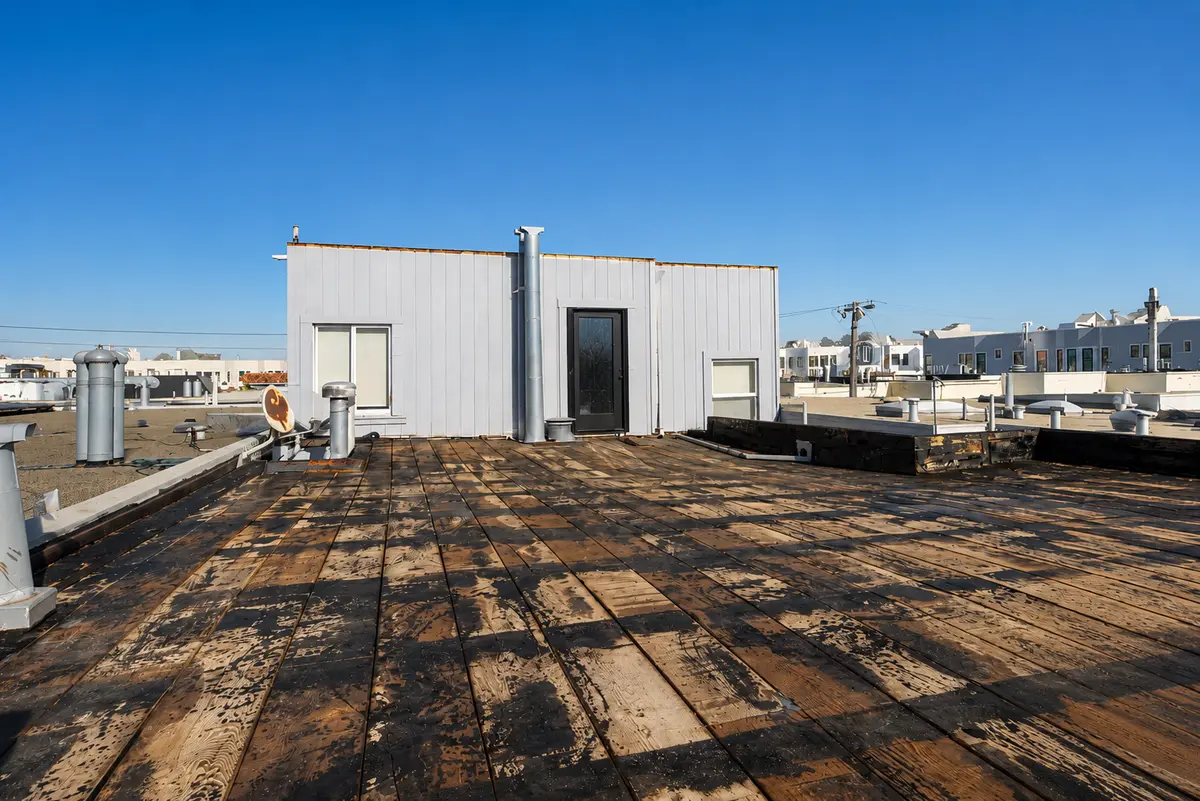
Commercial properties and flat-roofed residential buildings in San Francisco and South Bay markets benefit most from scheduled maintenance programs that include drain clearing, membrane inspection, and prompt repairs. Annual professional roof inspection is the standard recommendation for flat roofs.
Factors That Affect How Long a Roof Lasts
The material is only one part of the equation. Two homes with identical asphalt shingle roofs installed in the same year can reach very different outcomes based on the following variables.
Installation Quality
Installation quality is the single most controllable factor in roof longevity. Incorrect nailing patterns, insufficient underlayment, improper flashing at penetrations and valleys, and inadequate starter course installation are all common errors that shorten a roof’s service life regardless of the materials used. A premium architectural shingle installed incorrectly will underperform a standard shingle installed by a licensed, experienced contractor. This is why choosing a qualified roofing professional is not a discretionary decision — it directly determines how long your roof lasts.
Ventilation and Insulation
Proper ventilation and insulation in the attic space below the roof deck are critical to lifespan. When attics are inadequately ventilated, heat and moisture build up against the underside of the roof deck. This heat causes shingles to blister and curl prematurely, voids manufacturer warranties, and can cause structural damage to the roof deck itself. Homes in Marin County with tight construction and limited soffit venting are particularly susceptible to this failure mode. A professional roof inspection should always include an assessment of attic ventilation.
Routine Maintenance
Regular maintenance is the most straightforward way to extend how long a roof lasts. Gutters cleared of debris, valleys free of organic buildup, flashings resealed as needed, and minor repairs addressed promptly — these maintenance activities collectively add years to a roof’s service life. The inverse is equally true: a lack of maintenance accelerates deterioration at a pace that often surprises homeowners who assumed the roof was simply aging normally.
Environmental Conditions and Local Climate
Environmental conditions play a measurable role in roof lifespan. Marin County’s marine climate — persistent morning fog, moderate temperature swings, and significant winter rainfall — places consistent moisture demand on roofing materials. North-facing slopes that receive less sunlight retain moisture longer and are more prone to moss, algae, and lichen growth. Storm damage from atmospheric river events can accelerate deterioration of already-aging roofs. Homes with significant tree canopy experience accelerated debris accumulation and organic staining.
Signs Your Roof Is Reaching the End of Its Lifespan
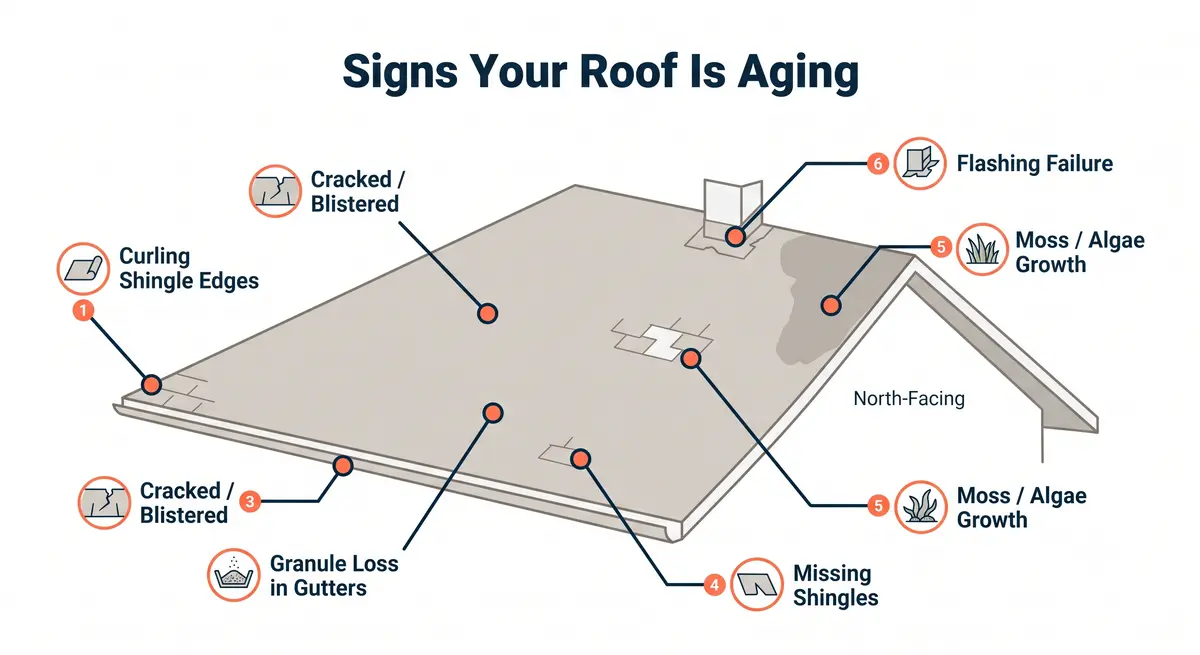
Knowing the signs of an aging roof allows homeowners to act before minor deterioration becomes major water damage or structural damage. These are the visible signs most commonly identified during a professional roof inspection on homes throughout Marin County and the Bay Area.
Visible Signs of Shingle Deterioration
- Curling or cupping at shingle edges — a sign of moisture imbalance or heat damage from inadequate ventilation
- Granule loss visible in gutters or at downspout discharge — granules protect shingles from UV degradation; their loss accelerates weathering
- Cracking, blistering, or brittle shingles that break when touched
- Missing shingles — even a few exposed sections create immediate vulnerability to water intrusion
- Dark staining, moss, or algae growth — signs of moisture retention that accelerate material breakdown
- Shingle edges that are visibly frayed, chipped, or torn
Interior Signs of Roof Aging and Damage
- Water stains on ceilings or walls — indicating active or past water intrusion through the roof surface or flashing
- Daylight visible through the roof deck in the attic space
- Soft spots or sagging in the roof deck when walking on the surface
- Peeling paint or mold growth in the attic — signs of chronic moisture accumulation
Roof Age as a Decision Signal
Roof age alone is a significant indicator, even when visible signs of damage have not yet appeared. A 25-year-old asphalt shingle roof that appears intact from the ground may have flashing failures, underlayment degradation, and reduced shingle granule coverage that are only visible during a close inspection. If you do not know the age of your roof, a professional roof inspection can often estimate it based on installation style, material type, and wear patterns.
Roof Repair vs. Roof Replacement: How to Know Which You Need
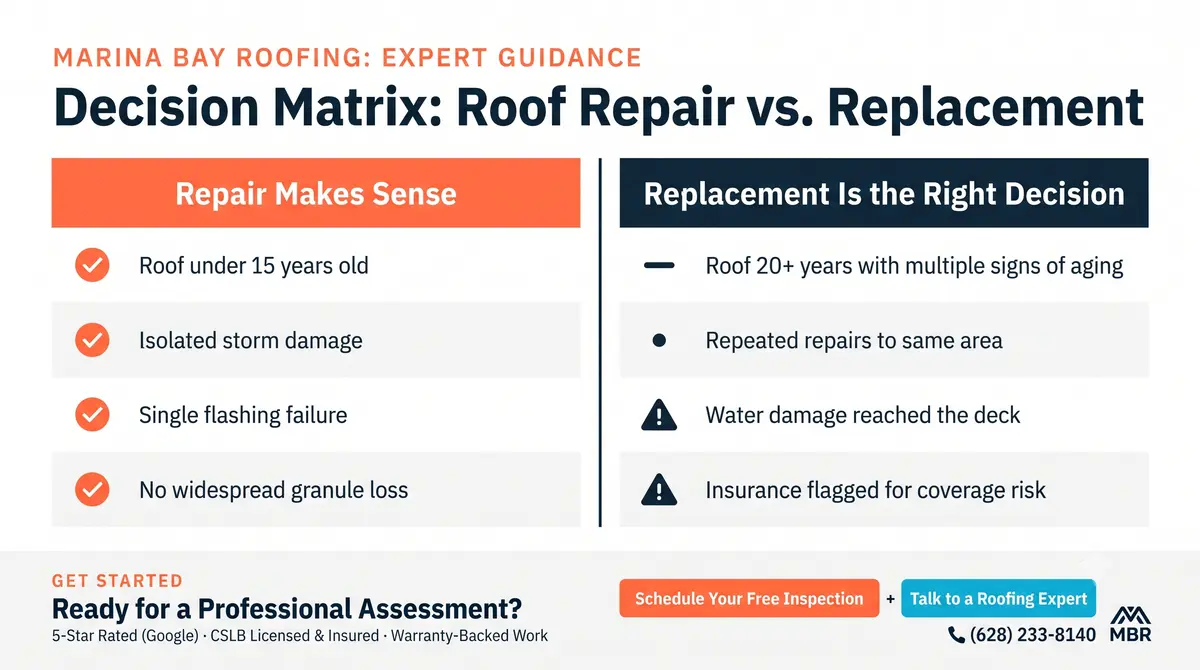
One of the most common questions homeowners face is whether their roof needs repair or full replacement. The answer depends on the roof’s age, the extent of damage, and whether the underlying structure is sound.
When Repair Makes Sense:
- The roof is less than 15 years old and damage is isolated to a specific area
- Storm damage is limited to a defined section with no signs of widespread deterioration
- Flashing failure at a single penetration point with no associated structural damage
- The underlying shingle roof shows no signs of widespread curling, granule loss, or age-related brittleness
When Replacement Is the Right Decision:
- The shingle roof is 20 or more years old and showing multiple visible signs of aging
- Repairs have been made repeatedly to the same area without lasting resolution
- Water damage has reached the roof deck and structural components
- The homeowner is planning to sell and the roof age or condition is a disclosure concern
- Homeowners insurance has flagged the roof age as a coverage risk
When the decision is unclear, a professional roof inspection provides the diagnostic foundation to make it confidently. Marina Bay Roofing conducts thorough inspections that assess shingle condition, flashing integrity, deck stability, and attic conditions — giving homeowners a clear picture of their roof’s remaining useful life and what action makes the most sense.
The Role of a Professional Roof Inspection in Extending Roof Life
A professional roof inspection is the most reliable tool homeowners have for understanding exactly how long a roof lasts and what condition it is currently in. The industry standard recommendation is a roof inspection every one to two years for most sloped roofs, and annually for flat roof systems. In Marin County and the Bay Area, an inspection following major storm events — particularly atmospheric river systems — is strongly advisable regardless of the inspection calendar.
During a professional inspection, a qualified roofer assesses granule retention and shingle surface condition, flashing integrity at valleys, ridges, and penetrations, soffit and ridge vent status for ventilation adequacy, gutter condition and drainage slope, and any visible signs of damage from the interior in the attic space. This inspection gives homeowners a documented baseline and a clear timeline for maintenance, repairs, or replacement planning.
Maintenance Tips to Maximize Your Roof’s Lifespan
These maintenance tips apply to the most common roofing materials in Bay Area residential homes:
- Clear gutters and downspouts at minimum twice per year — fall after leaf drop and spring before rainy season onset
- Remove organic debris (leaves, pine needles, branches) from roof valleys and low-slope areas before winter
- Inspect and reseal flashings at chimneys, skylights, and plumbing penetrations every few years
- Address minor repairs promptly — a single cracked or missing shingle left untreated can cause water damage that costs significantly more to correct later
- Trim overhanging branches that deposit debris and create abrasion points on the shingle surface
- Schedule a professional roof inspection following any significant storm event
- Check attic insulation and ventilation adequacy as part of any roofing evaluation — this directly impacts how long your roof lasts
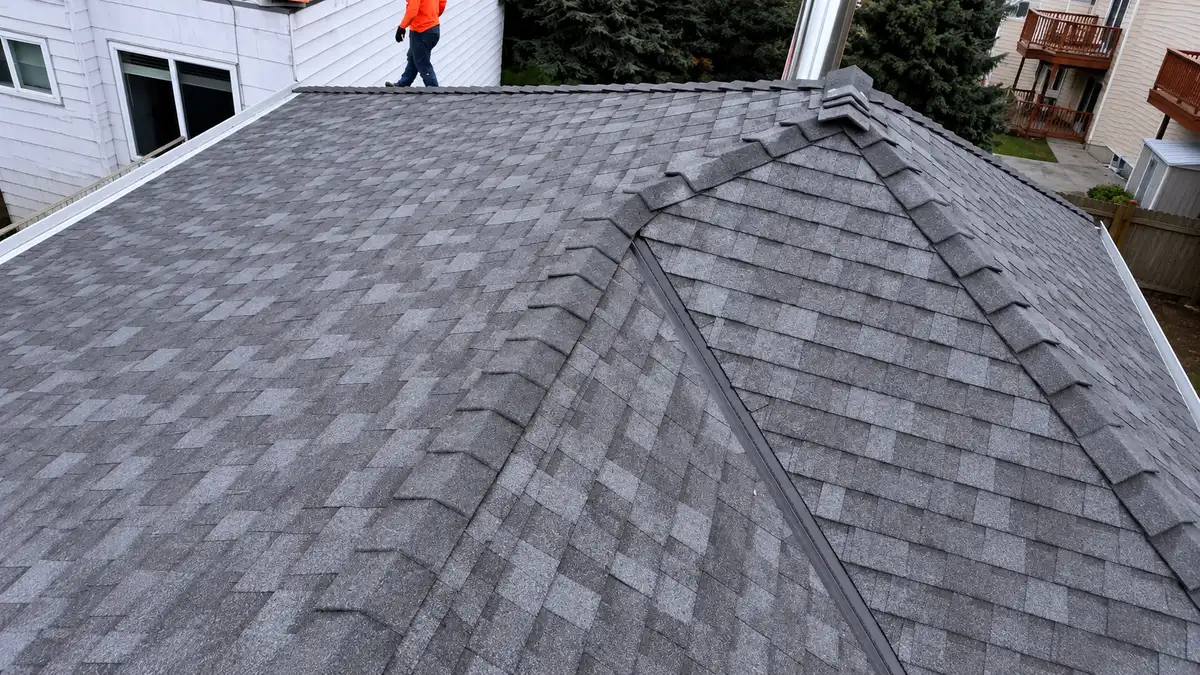
When Your Roof’s Lifespan Is Up: How Marina Bay Roofing Handles Replacement
When a roof has reached the end of its useful life, the replacement process should be methodical, code-compliant, and backed by a manufacturer warranty. Marina Bay Roofing serves homeowners throughout Marin County and the San Francisco Bay Area as a licensed, insured roofing contractor (CSLB License #1133789). Every replacement project we handle follows the same structured process.
1. We begin with a comprehensive roof inspection to document existing conditions, identify any deck or structural repair needs, and confirm the scope of replacement.
2. We pull all required permits — in Marin County, roof replacements typically require a permit regardless of scope, and permit requirements vary by municipality. We handle this process for every project.
3. We review material options with the homeowner, including dimensional asphalt shingles, metal roofing systems, and tile options, with an explanation of lifespan, warranty, and performance trade-offs for their specific roof.
4. Installation follows manufacturer specifications to preserve warranty coverage — correct nailing patterns, proper underlayment, and complete flashing replacement at all penetrations.
5. The project is inspected and closed with documentation the homeowner can retain for insurance purposes, home sale disclosure, and warranty records.
If you are unsure where your roof stands, a professional roof inspection is the right starting point. We will tell you exactly how long your roof has left, what maintenance it needs, and what to plan for — without pressure to act before you are ready.
Schedule a Professional Roof Inspection with Marina Bay Roofing
Whether you are trying to determine how long a roof lasts, evaluating visible signs of damage, or planning for an upcoming roof replacement, the right starting point is always a professional inspection by a qualified roofer who understands your specific roof, your local climate, and your building code requirements.
Marina Bay Roofing is Marin County’s 5-star roofing authority — a licensed, insured, and warranty-backed roofing contractor serving San Rafael, Mill Valley, Novato, Sausalito, Tiburon, Corte Madera, Fairfax, Larkspur, and communities throughout the San Francisco Bay Area. We handle residential roof repair, replacement, installation, and inspection with the precision and transparency that Marin County homeowners expect.
Call us at (628) 233-8140 or submit a request on our website to schedule your inspection. We will give you a clear picture of your roof’s current condition, how many years it has left, and what your best path forward looks like — with no pressure and no guesswork.