Skip to content

Get an Instant Roof Cost Estimate →

Need a new roof or repairs?

  • Call (628) 233-8140
  • Home
  • About
    • Who We Are
    • Why Choose Us?
  • Roofing Services
    • Roof Inspection
    • Roof Installation
    • Roof Repair
    • Roof Replacement
    • Skylight Installation
  • Commercial
    • Commercial Roofing Contractors
    • Commercial Roof Installation
    • Commercial Roof Repairs
  • Materials
    • Asphalt Shingles
    • Metal Roof Panels
    • Clay & Concrete Tiles
    • Skylight Installation
    • TPO Flat Roof
    • Flat Roof Contractors
    • Flat Roof Repair
    • Flat Roof Installers
  • Service Area

    San Francisco Bay Area

    • Alamo
    • Belmont
    • Berkeley
    • Burlingame
    • Danville
    • Dublin
    • Fremont
    • Los Gatos
    • Millbrae
    • Milpitas
    • Oakland
    • Orinda
    • Palo Alto
    • Piedmont
    • Pleasanton
    • Pleasant Hill
    • Redwood City
    • Richmond
    • San Bruno
    • San Carlos
    • San Francisco
    • San Jose
    • San Leandro
    • San Lorenzo
    • San Mateo
    • San Pablo
    • San Ramon
    • South San Francisco
    • Walnut Creek

    Marin County

    • Belvedere
    • Corte Madera
    • Fairfax
    • Kentfield
    • Larkspur
    • Mill Valley
    • Novato
    • Ross
    • San Anselmo
    • San Rafael
    • Sausalito
    • Tiburon
    • Tamalpais-Homestead Valley
  • Roof Cost Calculator
  • Gallery
  • FAQs
  • Blog
Contact
  • Roof Inspection

What to Do If Your Roof Is Leaking Right Now

Michael Machkovsky

  • Roof Inspection
Infographic showing six actionable steps to stop an emergency roof leak: contain water, relieve pressure, protect belongings, identify the source, apply a temporary fix, and call a professional.

A roof leak can quickly turn into serious damage if not handled immediately. Whether it’s a slow drip or active water coming through your ceiling, taking the right steps can minimize damage and reduce repair costs.

Here’s exactly what to do if your roof is leaking right now.

Quick Answers to FAQs

What should you do if a roof starts leaking?

Contain the water first, then relieve any pressure building behind the ceiling, protect nearby belongings, and identify the source only if it’s safe to do so. Apply a temporary fix such as a tarp or roofing tape, then schedule a professional inspection right away. Acting on all six steps in order limits how far the water spreads before help arrives.

Is a roof leak considered an emergency?

Yes. Even a small, slow leak can saturate insulation, weaken framing, and create conditions for mold growth within days. Treating any active leak as urgent — rather than waiting to see if it worsens — is the standard recommendation among roofing professionals.

Can a small roof leak turn into a bigger problem?

Almost always. Water doesn’t stay contained to the point of entry; it travels behind walls and ceilings, rots wood framing, and saturates insulation before any visible sign appears on the surface. A leak that looks minor from inside the home is often more extensive above the ceiling line.

What typically causes a roof to leak?

The most common causes are aging roofing materials, storm or wind damage, improperly sealed flashing around vents and chimneys, clogged gutters, and installation defects. Identifying which of these applies determines whether the fix is a targeted repair or a sign of a larger, system-wide issue.

Should a homeowner attempt to repair a roof leak themselves?

Temporary measures — a tarp, roofing tape, or clearing debris from gutters — are reasonable stopgaps until a professional arrives. Permanent repairs are a different matter: DIY fixes frequently fail under weather exposure and often address the symptom rather than the underlying cause, which leads to the same leak recurring.

How quickly does a roof leak need to be repaired?

As soon as possible, ideally with an inspection scheduled within a few days of noticing the leak. Every day a leak goes unaddressed increases the area of water damage and the scope of the eventual repair.

How can you tell if a roof leak is serious?

Active dripping or flowing water, a sagging or bubbling ceiling, multiple leak points, or any visible structural damage are all signs that immediate professional attention is needed rather than a wait-and-see approach.

What happens if a roof leak is ignored?

Left unaddressed, a roof leak can progress to structural damage, mold growth, and interior damage that extends well beyond the original point of entry. Water damage compounds over time rather than staying contained, so delay directly increases the eventual scope of repair.

What should you avoid doing when a roof is leaking?

Avoid ignoring the leak, climbing onto the roof during rain, high winds, or other unsafe conditions, relying on temporary fixes as a long-term solution, or delaying a professional inspection. Each of these choices tends to convert a manageable repair into a larger one.

How can future roof leaks be prevented?

Regular roof inspections, prompt repair of minor issues, routine gutter cleaning, and proper maintenance of flashing and seals are the primary ways homeowners extend roof life and catch developing leaks before they become active water intrusion.

What should you do if your roof is leaking?

If your roof is leaking, follow these steps immediately:

  1. Contain the water
  2. Relieve pressure from the ceiling
  3. Protect your belongings
  4. Identify the source (if safe)
  5. Apply a temporary fix
  6. Contact a roofing professional

Taking quick action can prevent further damage and reduce repair costs.

Step 1: Contain the water

The first priority is stopping water from spreading inside your home.

  • Place buckets or containers under the leak
  • Use towels or rags to absorb water
  • Move nearby furniture and valuables

Even a small leak can spread quickly, especially through insulation and drywall. Acting fast helps limit damage to surrounding areas.

Step 2: Relieve pressure from the ceiling

If water is trapped above your ceiling, it can cause the drywall to bulge or collapse.

What to do:

  • Look for sagging or bubbling areas
  • Carefully puncture the lowest point
  • Let water drain into a bucket

This prevents a sudden collapse, which can cause more damage and create safety hazards.

Step 3: Protect your belongings

Water damage doesn’t stay in one place—it spreads.

  • Move electronics and valuables out of the area
  • Cover large furniture with plastic
  • Avoid placing anything directly under the leak

Protecting your belongings early can prevent unnecessary loss.

Step 4: Identify the source of the leak (if safe)

If conditions allow, try to locate where the leak is coming from.

Common causes include:

  • missing or damaged shingles
  • cracked flashing
  • clogged gutters
  • roof penetrations (vents, chimneys)

Do not attempt to climb on the roof during rain, high winds, or unsafe conditions.
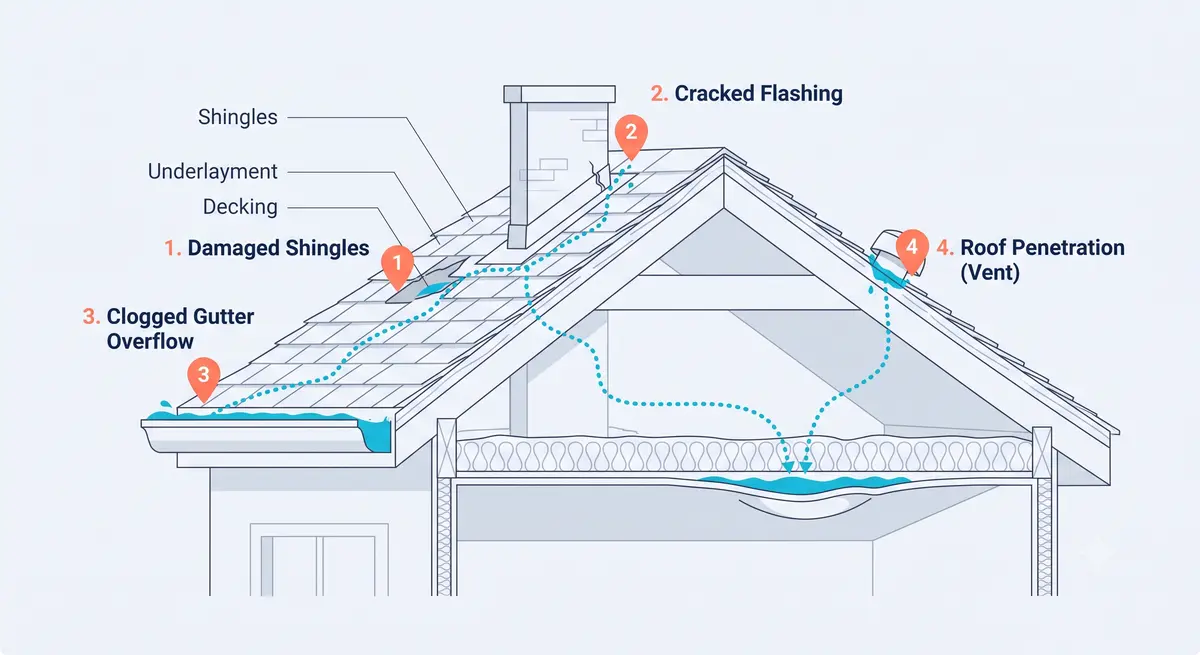
Cross-section diagram of a roof and attic showing how water travels through damaged shingles, cracked flashing, clogged gutters, and roof vents to cause interior leaks.

Step 5: Apply a temporary fix

Temporary fixes can slow or stop the leak until a professional can repair it.

Common options:

  • cover the damaged area with a tarp
  • apply roofing tape or sealant
  • clear debris from gutters to improve drainage

These are short-term solutions and should not replace proper repairs.

Step 6: Contact a roofing professional

The most important step is getting a professional inspection.

A roofing contractor will:

  • identify the true source of the leak
  • assess the extent of damage
  • recommend the correct repair

The sooner you act, the less damage you’ll have to deal with.

Is a roof leak an emergency?

Yes, a roof leak should be treated as an urgent issue.

Even small leaks can:

  • damage insulation
  • weaken structural components
  • lead to mold growth
  • increase repair costs

Addressing the issue early prevents more serious problems.

Can a small roof leak get worse?

Yes, small roof leaks almost always get worse over time.

Water can:

  • spread behind walls and ceilings
  • rot wood framing
  • damage insulation
  • create hidden structural issues

What starts as a minor drip can quickly turn into a major repair.

What causes roof leaks?

Roof leaks are typically caused by:

  • aging roofing materials
  • storm or wind damage
  • poor installation
  • clogged gutters
  • damaged flashing around vents or chimneys

Understanding the cause is key to fixing the problem correctly.

How much damage can a roof leak cause?

Roof leaks can lead to:

  • ceiling and drywall damage
  • insulation saturation
  • electrical risks
  • mold and mildew growth
  • structural deterioration

The longer the leak continues, the more extensive the damage becomes.

Can you fix a roof leak yourself?

You can apply temporary fixes, but permanent repairs should be handled by a professional.

DIY repairs often:

  • fail under weather conditions
  • miss the root cause
  • lead to repeat issues

A professional ensures the problem is fully resolved.
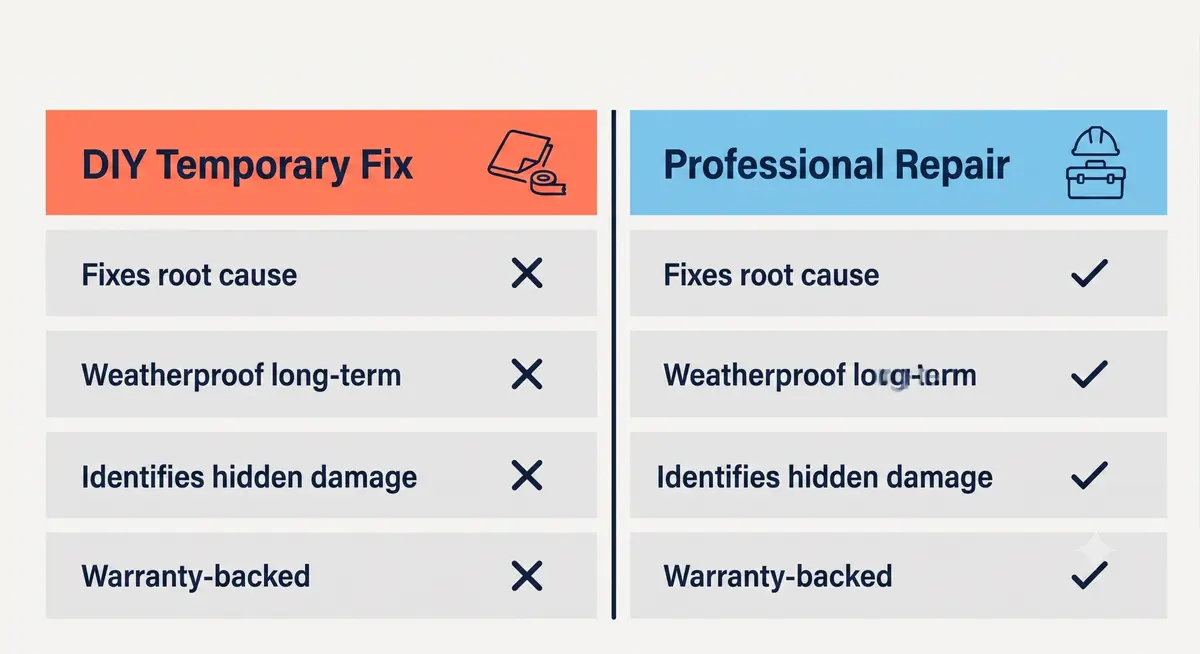
Comparison infographic contrasting DIY temporary roof leak fixes with professional roof repair across root-cause resolution, weatherproofing, hidden damage detection, and warranty coverage.

How quickly should you fix a roof leak?

Roof leaks should be addressed as soon as possible.

Delaying repairs can:

  • increase damage
  • raise repair costs
  • lead to more extensive work

In most cases, you should schedule an inspection within a few days.

Will insurance cover a roof leak?

Insurance may cover roof leaks if caused by sudden damage, such as storms or falling debris.

It typically does not cover:

  • wear and tear
  • lack of maintenance

A professional inspection can help determine whether your situation qualifies.

How do you know if a roof leak is serious?

Signs of a serious roof leak include:

  • active dripping or flowing water
  • ceiling sagging or bubbling
  • multiple leak areas
  • visible structural damage

If you notice these, you should act immediately.

What happens if you ignore a roof leak?

Ignoring a roof leak can lead to:

  • major structural damage
  • mold growth
  • interior damage
  • significantly higher repair costs

Small issues rarely stay small when water is involved.

How to prevent roof leaks in the future

To reduce the risk of leaks:

  • schedule regular roof inspections
  • fix small issues early
  • keep gutters clean
  • maintain flashing and seals

Preventative maintenance extends the life of your roof.
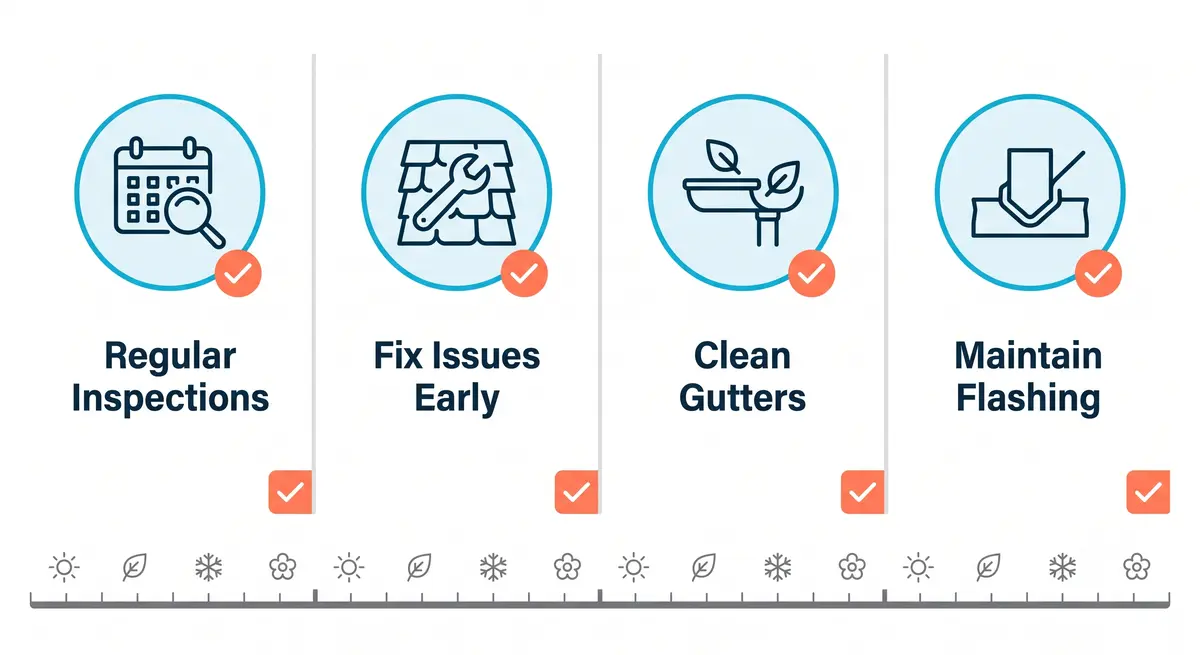
Icon infographic showing four year-round roof maintenance tasks to prevent leaks: regular inspections, fixing small issues early, cleaning gutters, and maintaining flashing.

When should you call a roofing contractor?

You should call a roofing contractor if:

  • you notice any signs of a leak
  • water is entering your home
  • your roof has visible damage
  • you’re unsure about your roof’s condition

Early action helps avoid costly repairs.

What should you NOT do if your roof is leaking?

Avoid these common mistakes:

  • ignoring the leak
  • climbing on the roof in unsafe conditions
  • relying on temporary fixes long-term
  • delaying professional inspection

These mistakes can make the situation worse.

How much does it cost to fix a roof leak?

Roof leak repair costs vary depending on:

  • extent of damage
  • location of the leak
  • roofing materials
  • accessibility

Minor repairs may cost a few hundred dollars, while larger issues can cost significantly more. The only way to know for sure is with a professional inspection.
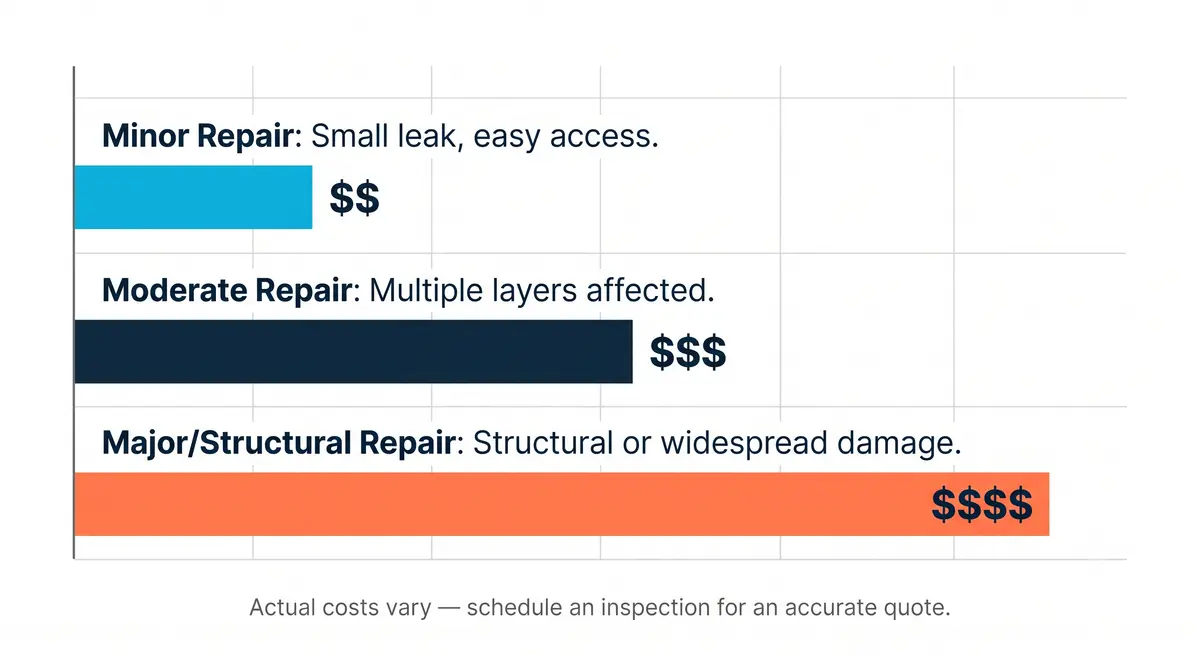
Bar chart comparing relative roof leak repair costs across minor, moderate, and major/structural severity levels, from lowest to highest cost.

Ready to fix your roof leak?

A leaking roof won’t fix itself—and waiting will only make it worse.

The best next step is to get a professional inspection so you can stop the leak and prevent further damage.

Request a roof inspection and estimate to get a clear solution for your roof.

Views: 6

Search ideas & guides for your remodel

Sign up for our newsletter

Subscribe to receive the latest blog posts to your inbox every week.

Newsletter

Consent

By subscribing you agree to with our Privacy Policy.

Recent Posts

  • All Posts
  • Commercial Roofing
  • Home Restoration
  • Roof Inspection
  • Roof Installation
  • Roof Repair
  • Roof Replacement
Aerial view of a hillside home with a dark asphalt shingle roof, solar panels, and wood decks surrounded by trees.

Insurance and Roof Claims Guide

Five-step infographic for choosing a roofing contractor in Marin County: verify the license, confirm insurance, check local experience, compare itemized estimates, and review ratings and warranty terms.

How to Choose a Roofing Contractor in Marin County

Infographic of a Marin County home mid-reroof beside the five roofing permit steps: confirm jurisdiction, submit application, plan review, roof work, and final inspection, with possible coastal, septic, and energy code reviews.

Roofing Permits in Marin County: What Homeowners Need to Know

Attic cross-section showing cool air entering soffit vents, passing through baffles over insulation, and warm air exiting a ridge vent.

Roof Ventilation & Attic Guide

Comparison chart of TPO, EPDM, and asphalt shingle roofing showing lifespan, energy reflectivity, and cost differences for flat vs. sloped roofs.

TPO & Flat Roofs in the Bay Area: Cost, Lifespan, and Repair vs. Replace

Map diagram showing an atmospheric river moisture band traveling from the tropical Pacific Ocean to the San Francisco Bay Area coastline.

How Atmospheric Rivers Damage Bay Area Roofs — What Homeowners Should Watch For

Diagram showing how Marin's marine layer fog causes granule loss, algae growth, and trapped attic moisture that shorten asphalt shingle roof life from 25–30 years to 10–15 years.

Why Asphalt Shingle Roofs Fail Early in Marin’s Marine-Layer Climate

Three-stage roof repair process diagram showing emergency repair, temporary repair, and permanent repair for Marin County roof leaks.

Roof Leak Triage in Marin: Emergency vs. Temporary vs. Permanent Repair

Hero infographic comparing overlay versus full tear-off roof replacement, showing shingle layers, deck inspection status, and cost differences.

The Re-Roofing Process: What to Expect, Overlay vs. Tear-Off

Share this post
  • Roof Inspection
Picture of Michael Machkovsky
Michael Machkovsky
Michael serves as CEO at Marina Bay Roofing and brings seven years of hands-on roofing and construction experience to the team. Born and raised in the Bay Area, he’s dedicated to helping homeowners feel confident in the work protecting their homes. When he’s not on the job, you’ll find him spending time with his 7-year-old son.

Blog

Related posts

Lorem ipsum dolor sit amet, consectetur adipiscing elit.

Aerial view of a hillside home with a dark asphalt shingle roof, solar panels, and wood decks surrounded by trees.
Roof Inspection
Michael Machkovsky

Insurance and Roof Claims Guide

Filing a roof insurance claim is one of the most

Read More »
October 27, 2026
Five-step infographic for choosing a roofing contractor in Marin County: verify the license, confirm insurance, check local experience, compare itemized estimates, and review ratings and warranty terms.
Roof Installation
Michael Machkovsky

How to Choose a Roofing Contractor in Marin County

Marin County homeowners eventually face the same question: how do

Read More »
October 26, 2026
Infographic of a Marin County home mid-reroof beside the five roofing permit steps: confirm jurisdiction, submit application, plan review, roof work, and final inspection, with possible coastal, septic, and energy code reviews.
Roof Installation
Michael Machkovsky

Roofing Permits in Marin County: What Homeowners Need to Know

Getting a permit in Marin County follows a process that

Read More »
October 26, 2026
View All

Sign up for our newsletter

Join Our Community for Updates and roof renovation Insights

Newsletter

Consent

Ready to imagine your own project?

Request Your Personalized Consultation

and let’s talk about your space, your ideas, and how we can bring them to life.

Quick links
  • Home
  • About
  • Roofing Services
  • Commercial Roofing
  • Materials
  • Gallery
  • FAQ
  • Blog
  • contact
Services
  • Roof Inspection
  • Roof Installation
  • Roof Repair
  • Roof Replacement
  • Skylight Installation
Contact Us

Locations:
4411 Geary Blvd #301
San Francisco, CA 94118
Phone: (628) 233-8140

710 C Street Suite 208
San Rafael, CA 94901
Phone: (415) 860-7257

Email: [email protected]

License & Certifications

State Contractor License #1133789

Fully Licensed • Bonded • Insured

Find Us on Map

Proudly serving our community with honesty, craftsmanship, and care.

© 2026Marina Bay Roofing Inc.

Privacy Policy

Terms of Service

Facebook-f Yelp Instagram